
Local Experiences
Sukhothai Historical Park at Sunrise
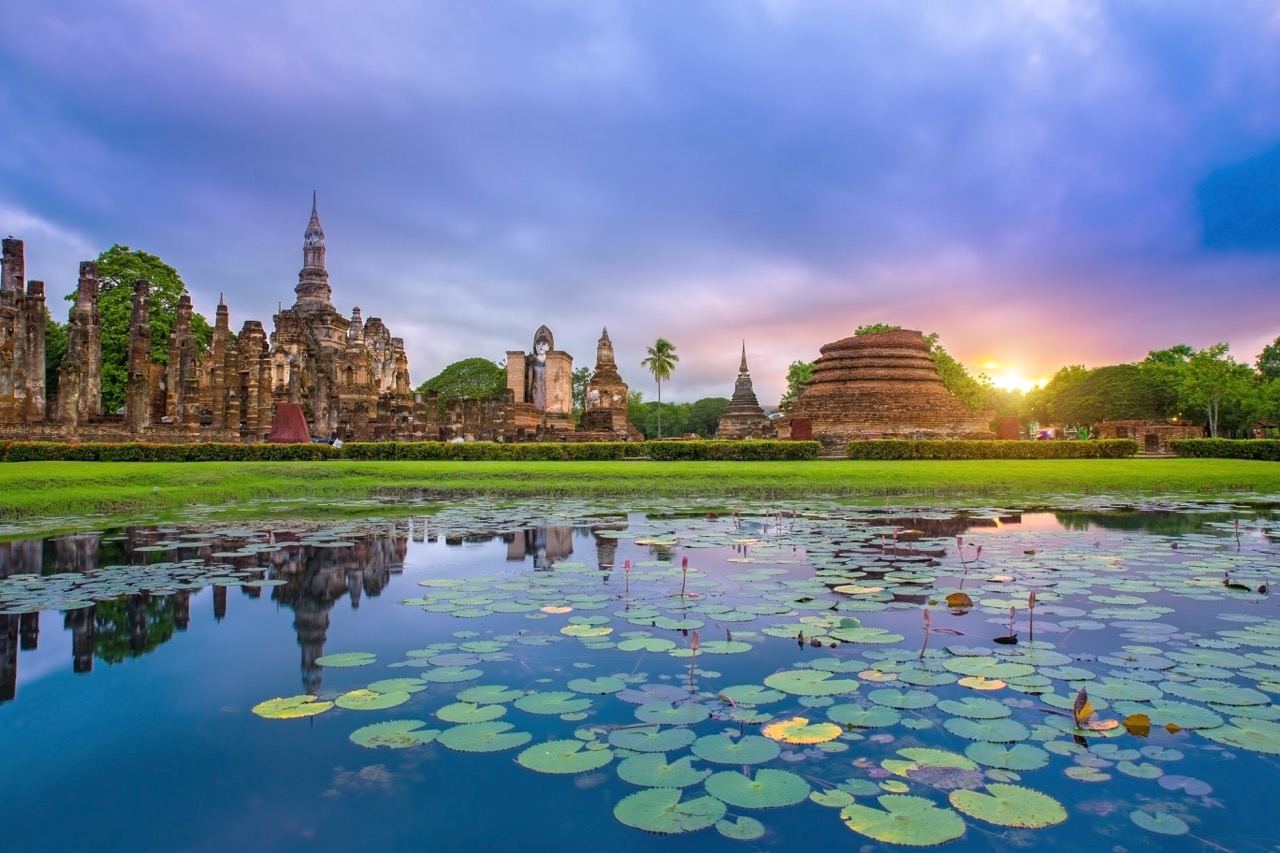
The light arrives before you can see it. Somewhere beyond the eastern treeline, the sky bleaches from black to deep violet, then a pale amber that spreads slowly across stone that has stood for seven centuries. At 5:30 in the morning, the Sukhothai Historical Park belongs to almost no one.
The Great Kingdom
One point eight kilometres from Sriwilai, the bicycle gate on the eastern side of the park is already unlatched when you arrive. The staff here have been doing this long enough to know that guests who come at this hour are not looking for a guided tour. They want the place to themselves — before the morning silence breaks, before the coach tours arrive, before the park transforms into something more like a monument and less like a living ruin.
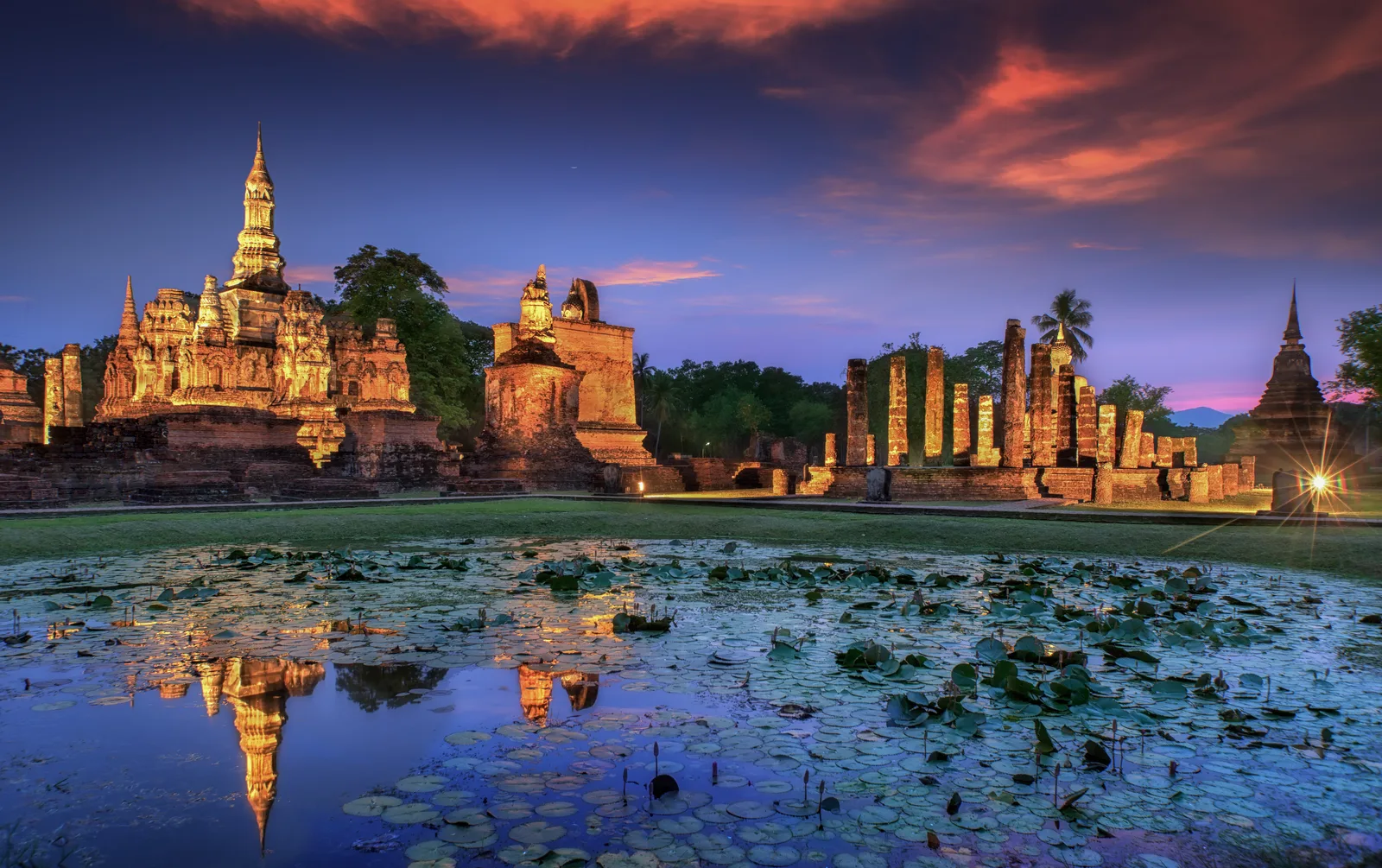
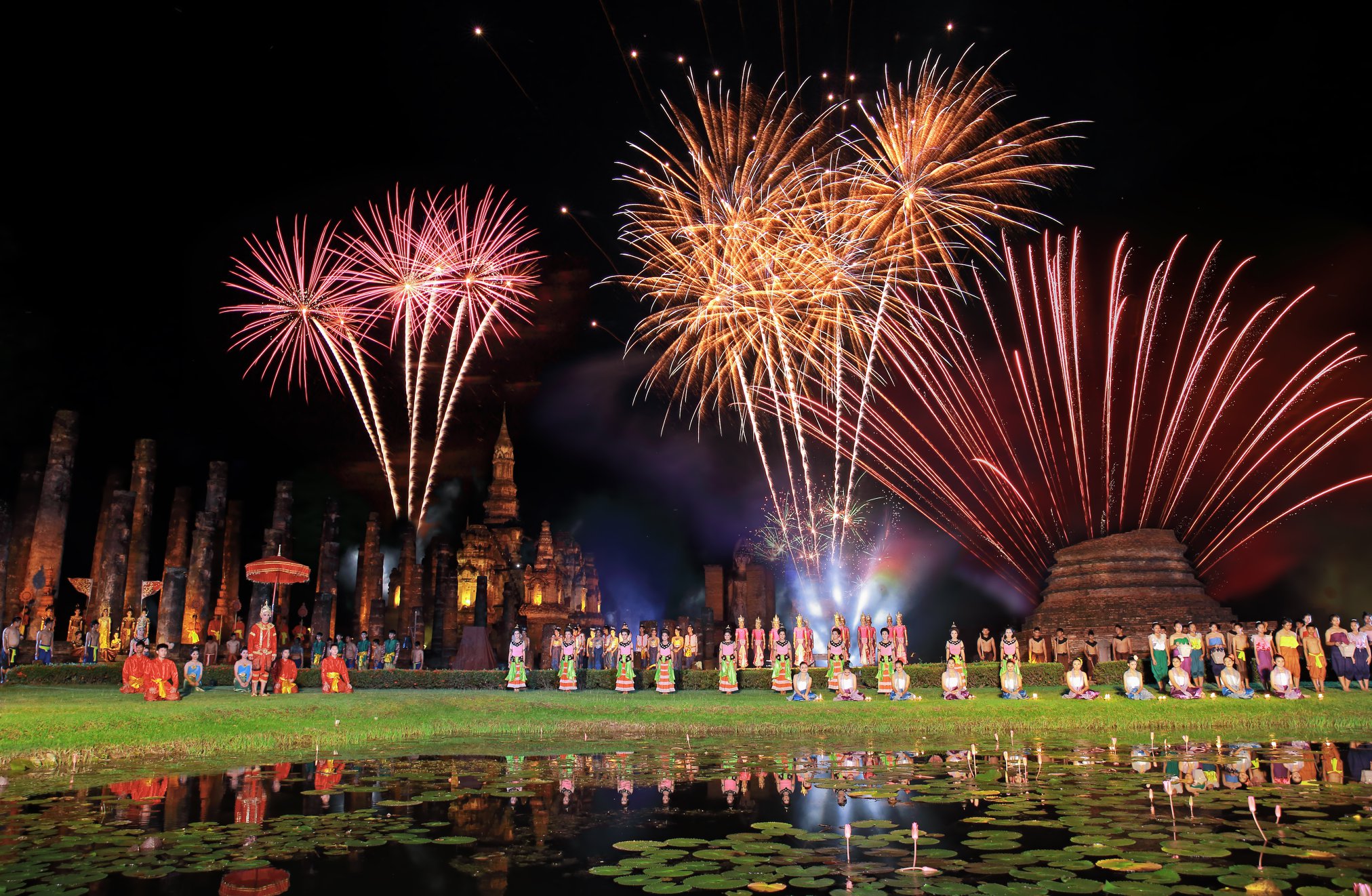
Sukhothai was the first capital of a unified Siamese kingdom. Founded in the 13th century, it was a city of 70,000 people at its height, a centre of trade, Buddhism, and art. The ruins that remain today — formally designated a UNESCO World Heritage Site in 1991 — cover an area of roughly 70 square kilometres, scattered across a flat landscape of rice fields, forests, and reservoirs built by the kings themselves as part of an elaborate hydraulic system that fed both the city and its moats.
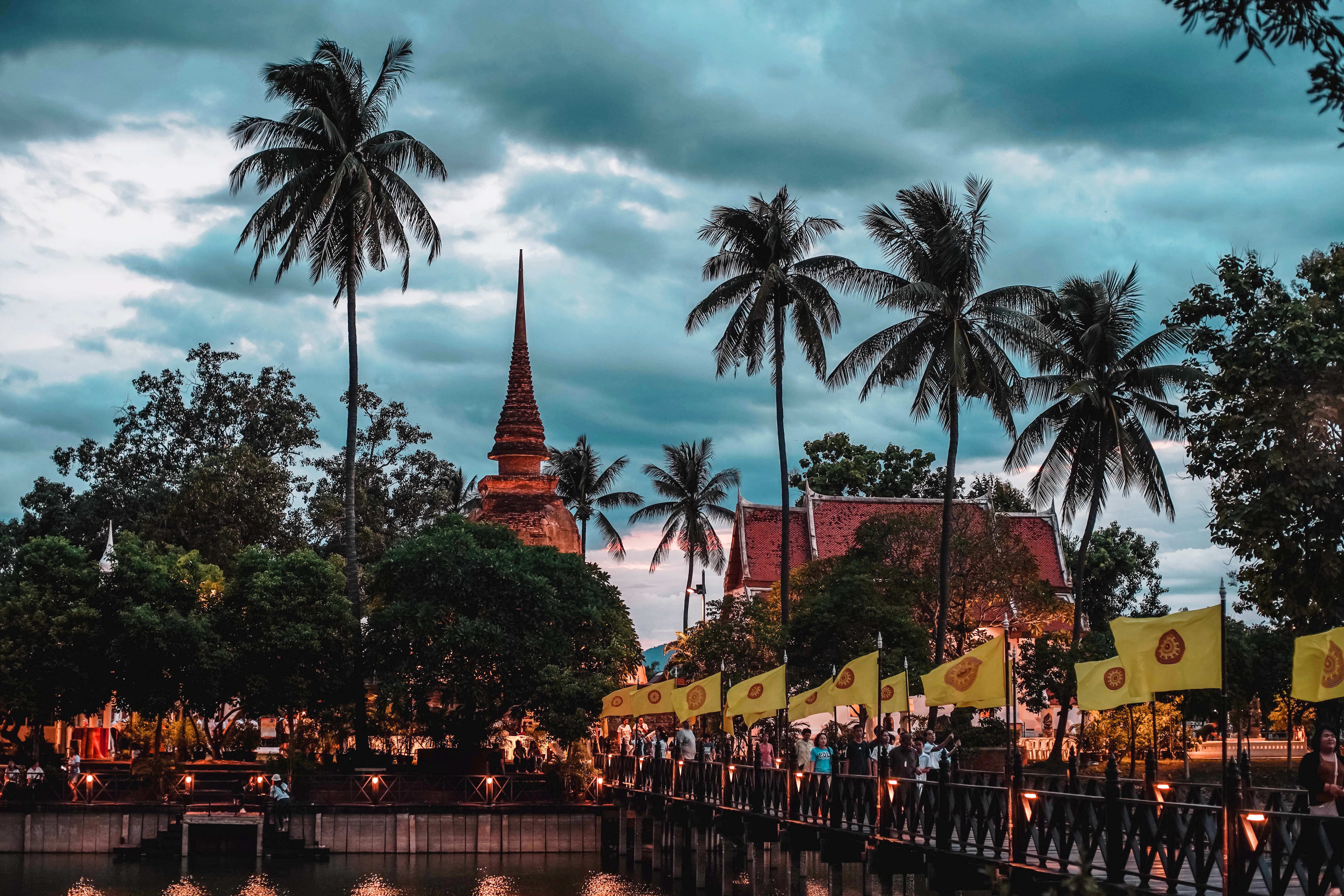
The park protects 193 monuments. In the cool of early morning, with the mist still low across the reservoir and the lotus yet to open, it is possible to move through them with a sense of time that is hard to locate in ordinary life. A heron stands at the edge of a moat that was dug in 1280. The stone of Wat Mahathat, the great relic temple at the centre of the ancient city, is the colour of old bone.
Wat Mahathat
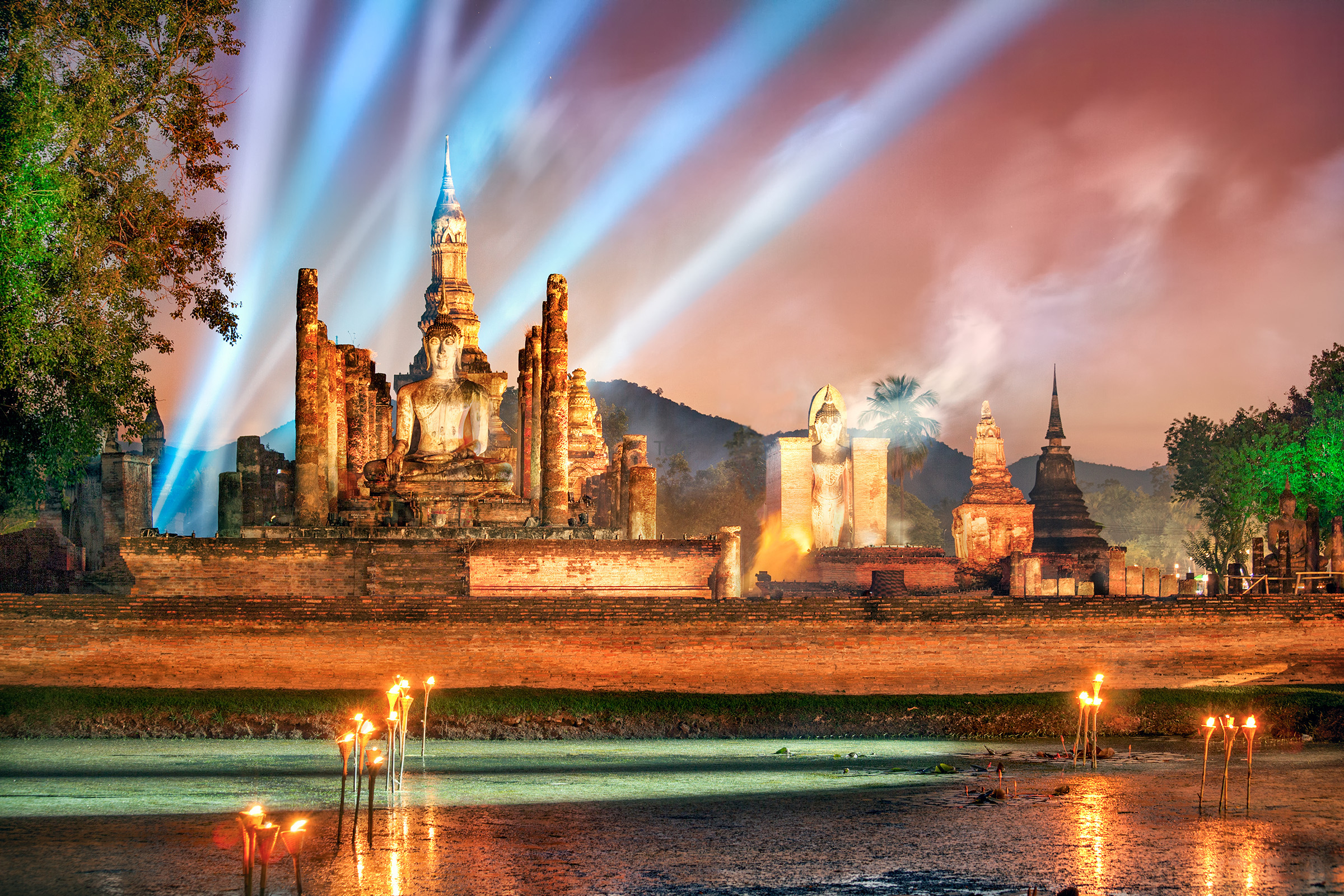
Wat Mahathat is where you should go first, before the light is too strong. The central prang — a Khmer-style tower that was later modified into the lotus-bud form unique to Sukhothai — catches the sunrise on its eastern face and holds it for perhaps twenty minutes before the moment dissolves. The principal Buddha image that once stood inside was removed to the Bangkok National Museum in the 19th century, but the platform remains, and the proportions of what was built around it make it clear that what once stood here was intended to be seen from a great distance and at a moment of stillness.
Wat Si Chum
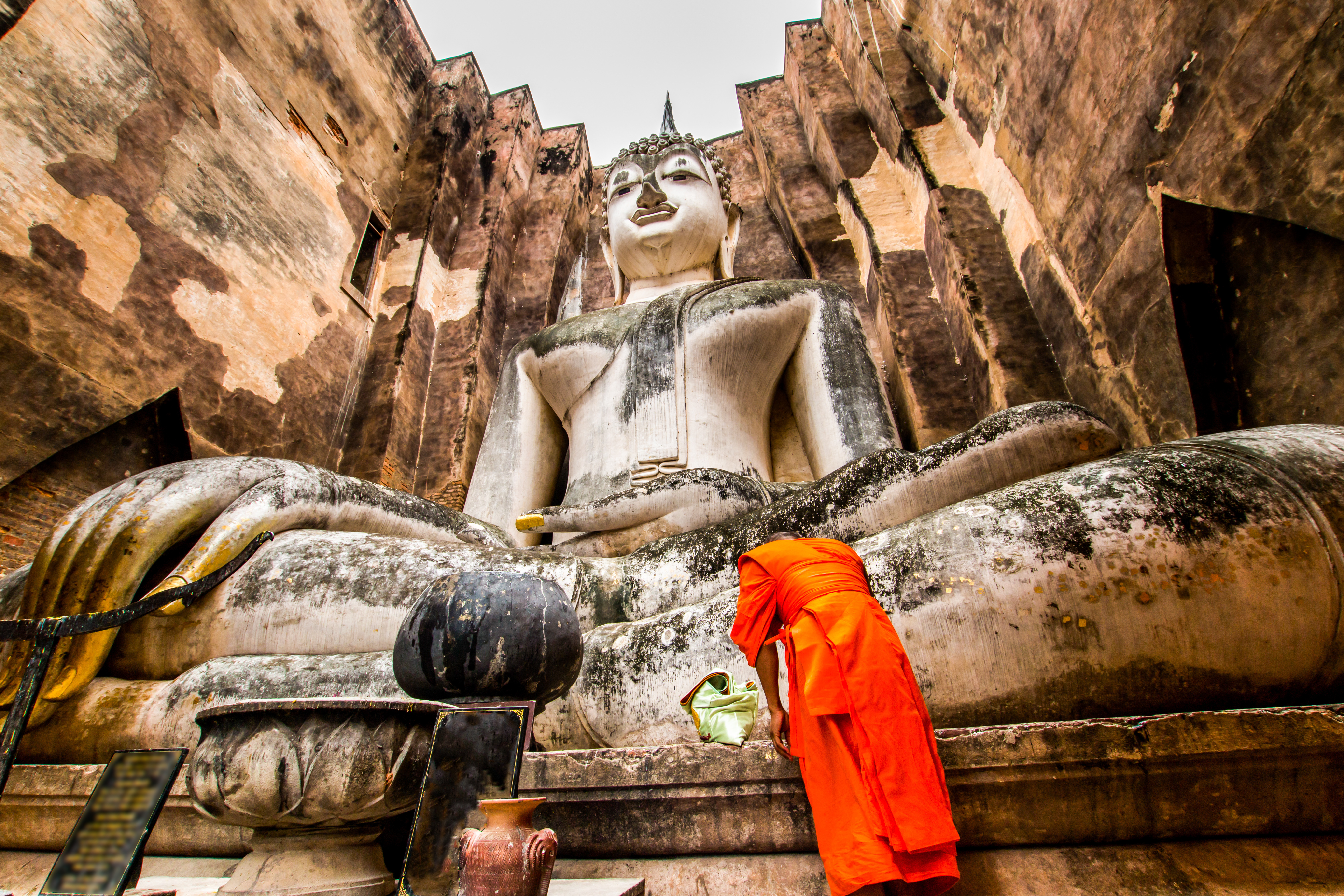
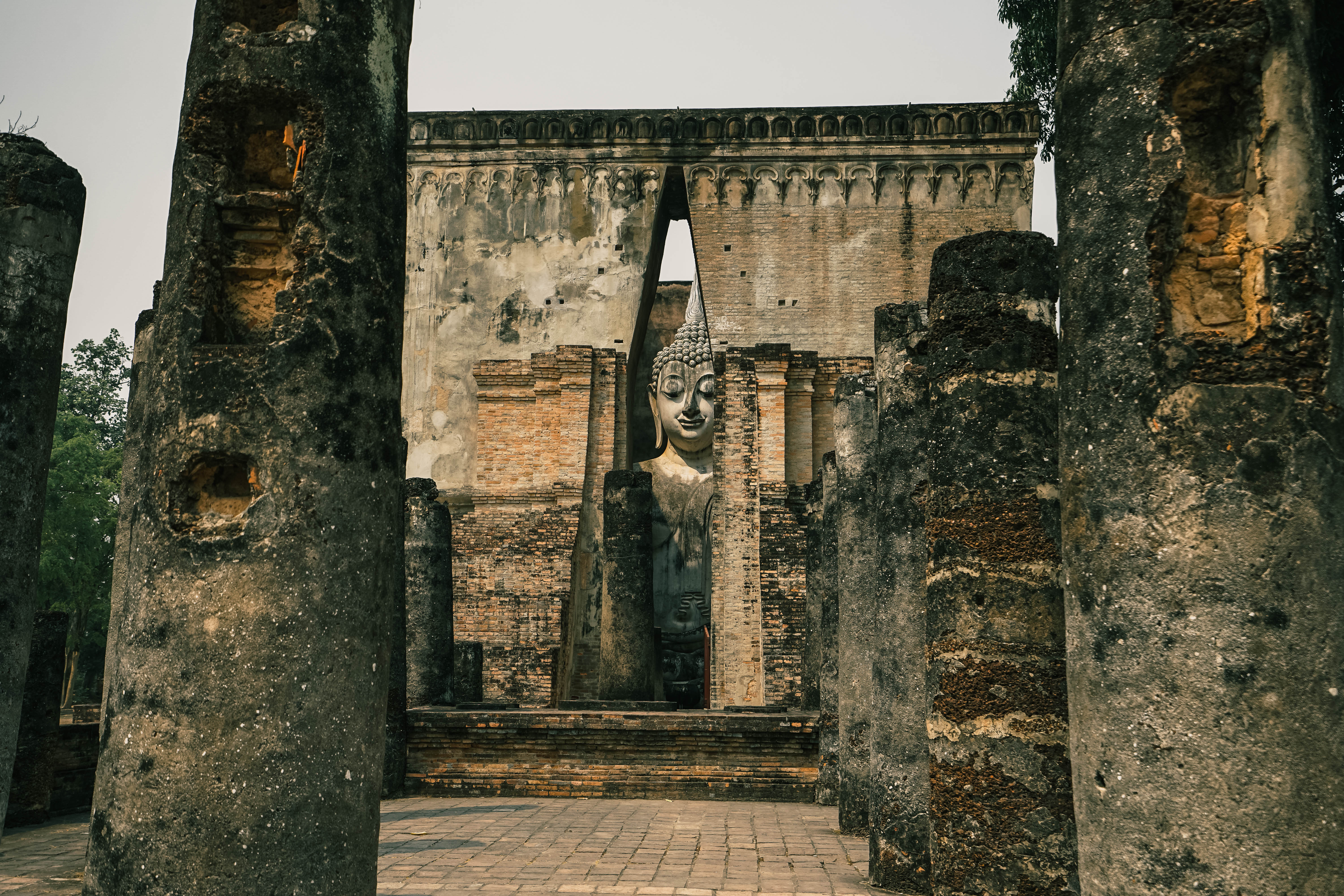
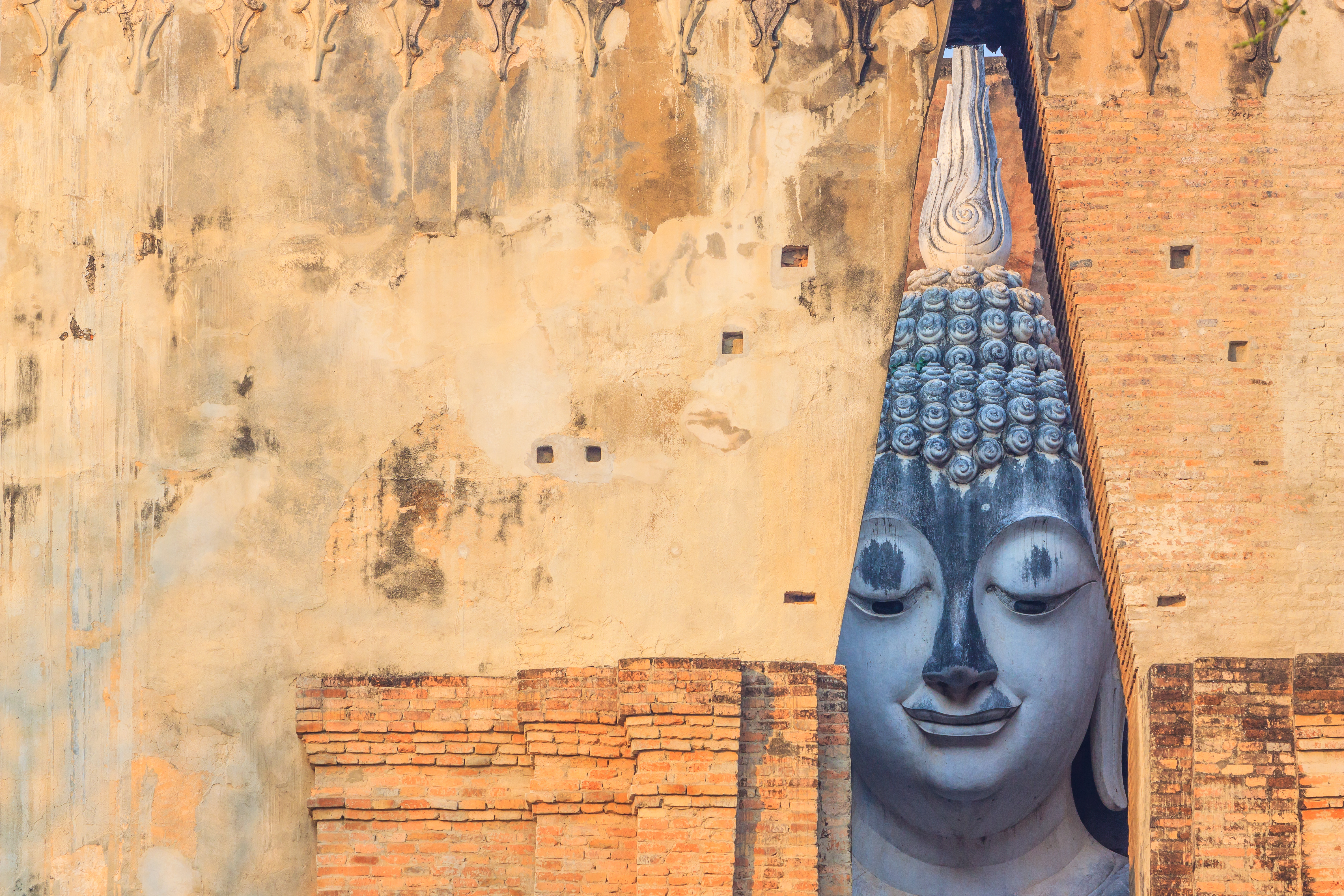
Wat Si Chum is worth cycling to before 7am. The mondop — a square, windowless chamber — contains a seated Buddha of extraordinary scale: 11 metres wide at the knee, its fingertip at head height. The single narrow opening in the front wall is precisely the width needed to frame the face, and at sunrise the light enters the chamber at an angle that illuminates the gilded features from below. Local people come here to offer incense on days when they need to ask for something. The ash in the brazier in front of the image is always fresh.
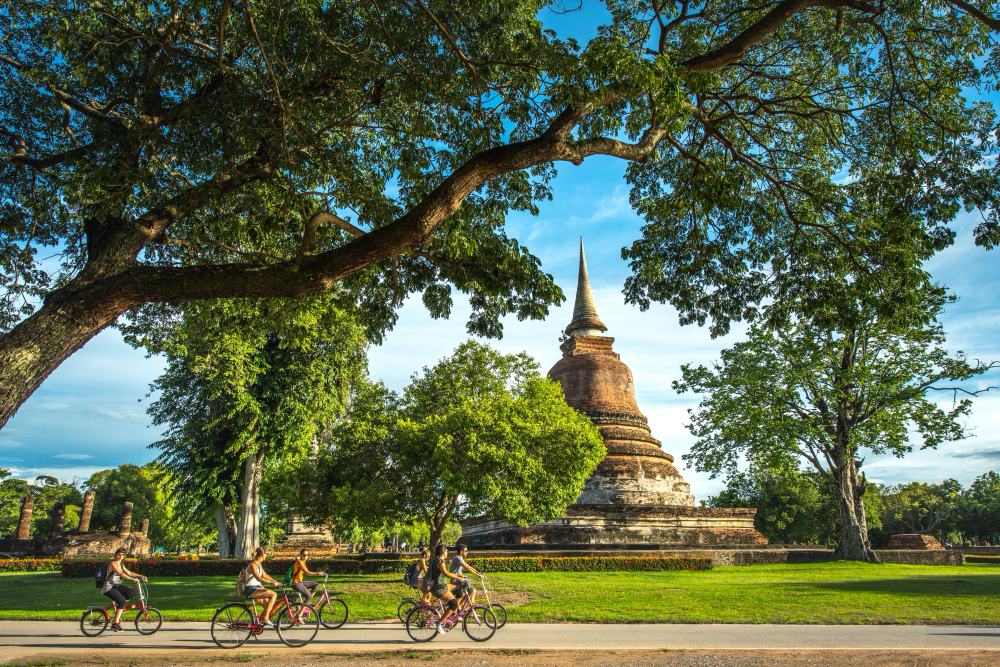
Our team at Sriwilai can arrange for a bicycle to be ready at reception from 5:15am, with a packed breakfast to eat by the reservoir at Wat Sa Si — the lake temple on the island in the middle of the central zone — once the sun has cleared the trees. The park is 1.8 kilometres from the resort. In the cool season, from November to February, the ride takes eight minutes.
The Great Kingdom was not built to last. It was built to be remembered.
Visitor Information
Plan Your Visit
Distance from Resort
1.8 km from Sriwilai — an 8-minute bicycle ride
Best Time to Visit
Arrive at 5:30am during the cool season (November to February)
Getting There
Complimentary bicycles are available from resort reception from 5:15am. For tuk-tuk transportation, please contact the Front Desk for assistance and local arrangements.
What to Bring
- Light layers for the early morning chill
- Water bottle
- A small offering for the temples
- Camera
Gallery
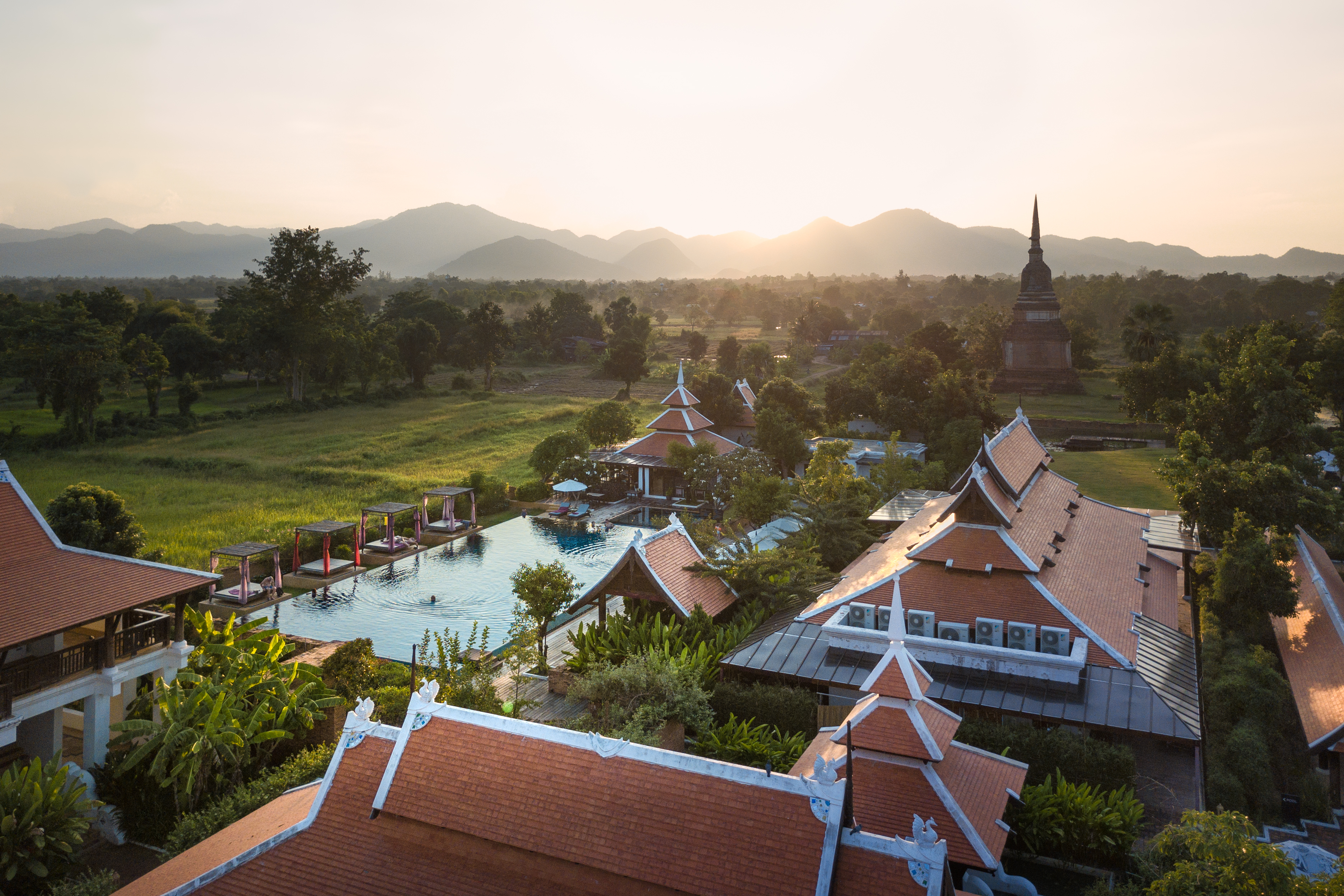
Sriwilai Sukhothai Resort & Spa
Stay 1.8 km from the ruins.
Wake before sunrise. Cycle to the park. Return for breakfast.