
Cultural Experiences
Loy Krathong Festival in Sukhothai
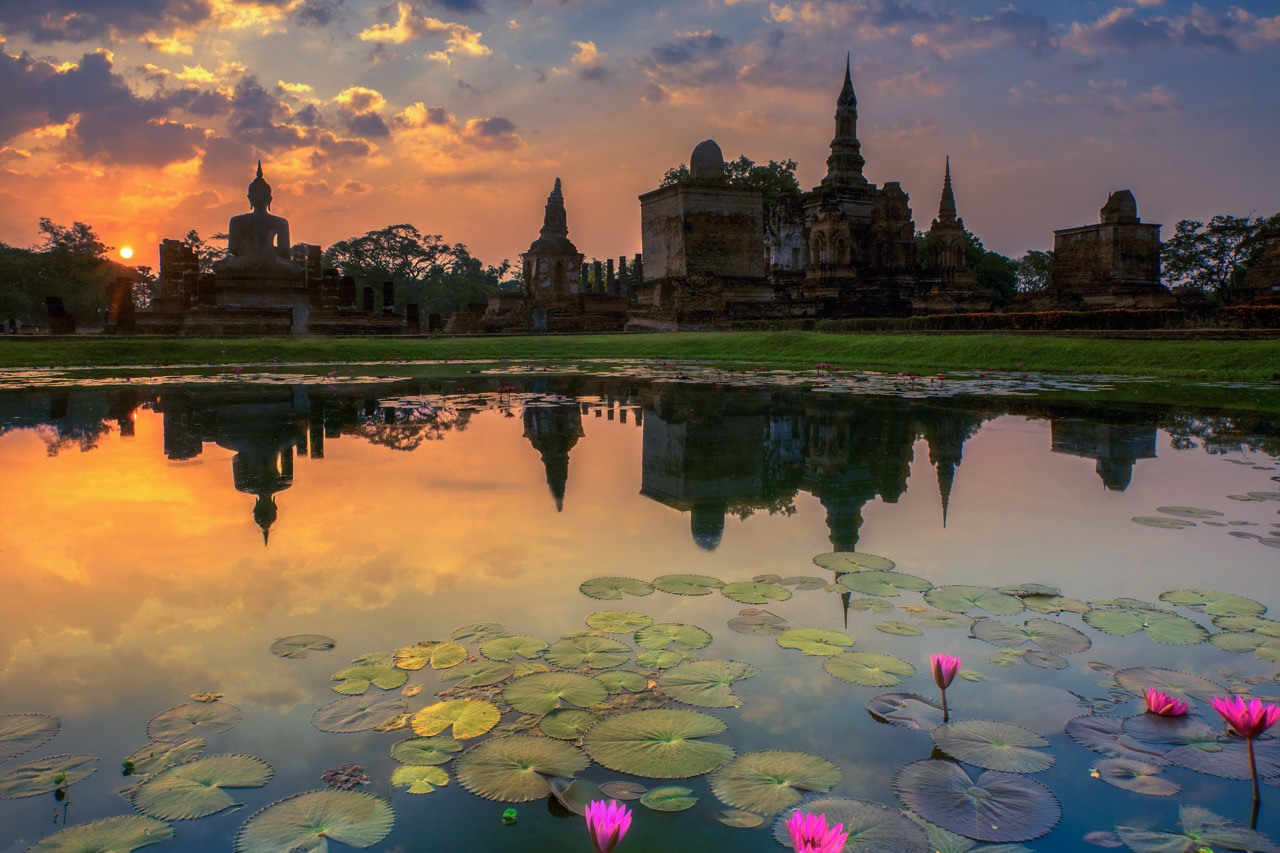
Once a year, on the full moon of November, Sukhothai transforms. The ancient city — already extraordinary by daylight — is lit by firelight: the slow drift of a thousand krathong across the moats, the oil lamps along the processional paths, the paper lanterns rising and carried north on the cool night air. It is one of the most beautiful nights in Thailand, and it began here, seven centuries ago, in this particular city, beside this particular river.
The Birthplace of a Festival
Loy Krathong is celebrated across Thailand, but Sukhothai is where it began. The festival traces its origins to the Sukhothai Kingdom of the 13th and 14th centuries — though historians debate the precise date and the precise meaning. What is not in dispute is that the historical records of the Sukhothai period describe a festival of lights held on the full moon of the twelfth lunar month, conducted on the waterways of the ancient city. The modern celebration in Sukhothai draws a direct line from those records: it is performed in the same location, on the same water, under the same seasonal full moon.
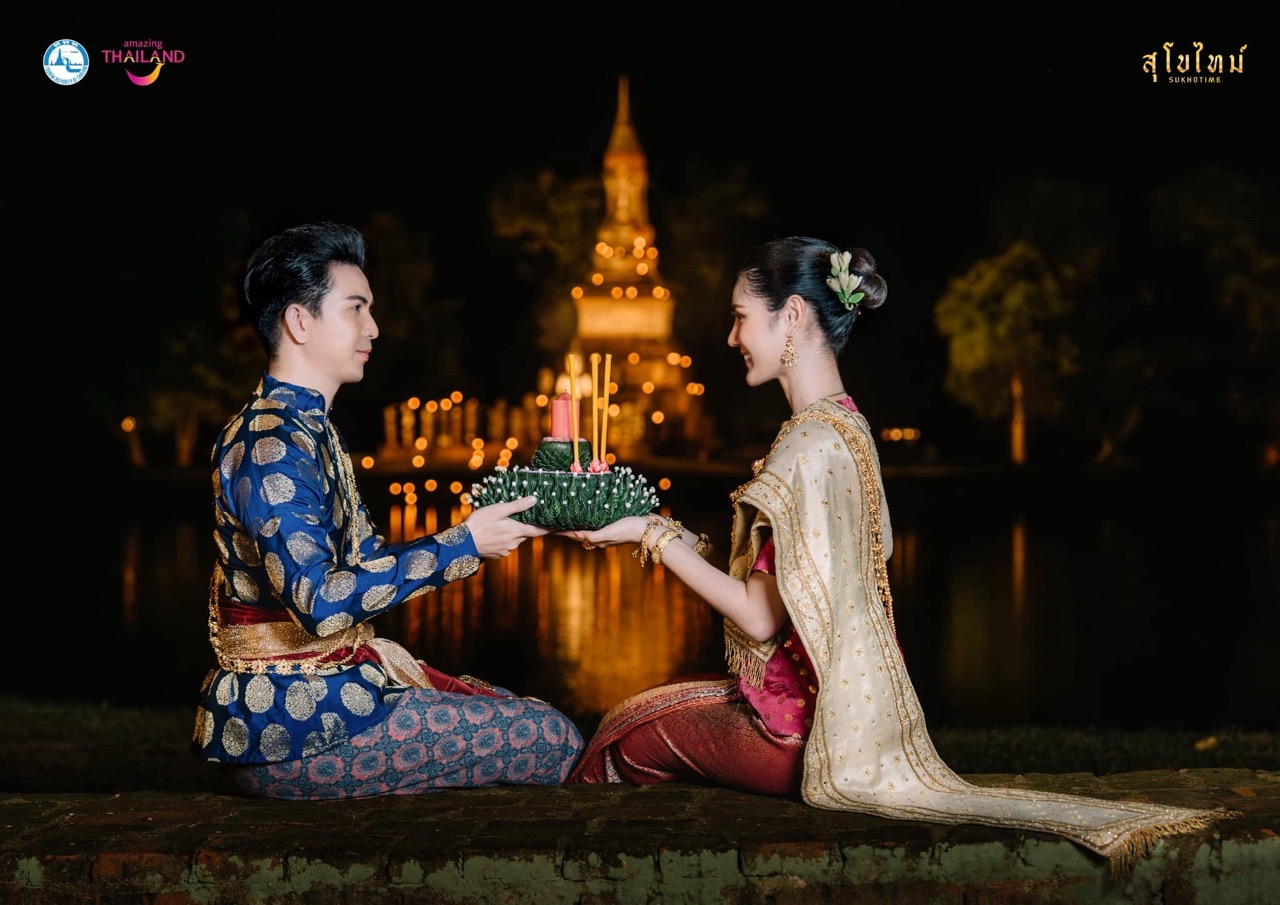
The word "loy" means to float; a "krathong" is a small decorated vessel — traditionally a section of banana trunk fashioned into a lotus blossom and fitted with candles, incense sticks, and flowers. It is floated on a body of water as an act of offering and release: to the goddess of rivers, to the water spirits, and to whatever personal burden the maker chooses to send with it. The gesture is ancient, and the meaning is individual. What travels out with the krathong when the candle is lit is between the person who made it and the water that receives it.
The Ancient City at Night
During Loy Krathong week, the Sukhothai Historical Park stays open after sunset. The park's authorities ring the temple grounds with oil lamps set into the earth along the pathways. The reflections in the moats are long and unsteady. At Wat Mahathat, the great relic temple at the center of the ancient city, the lotiform spires are lit from below with warm gold light that catches the carved stone above the entry arch. At Wat Sa Si — the island temple, reached by a narrow wooden bridge — the light of krathong moving across the water doubles in the reflection below.
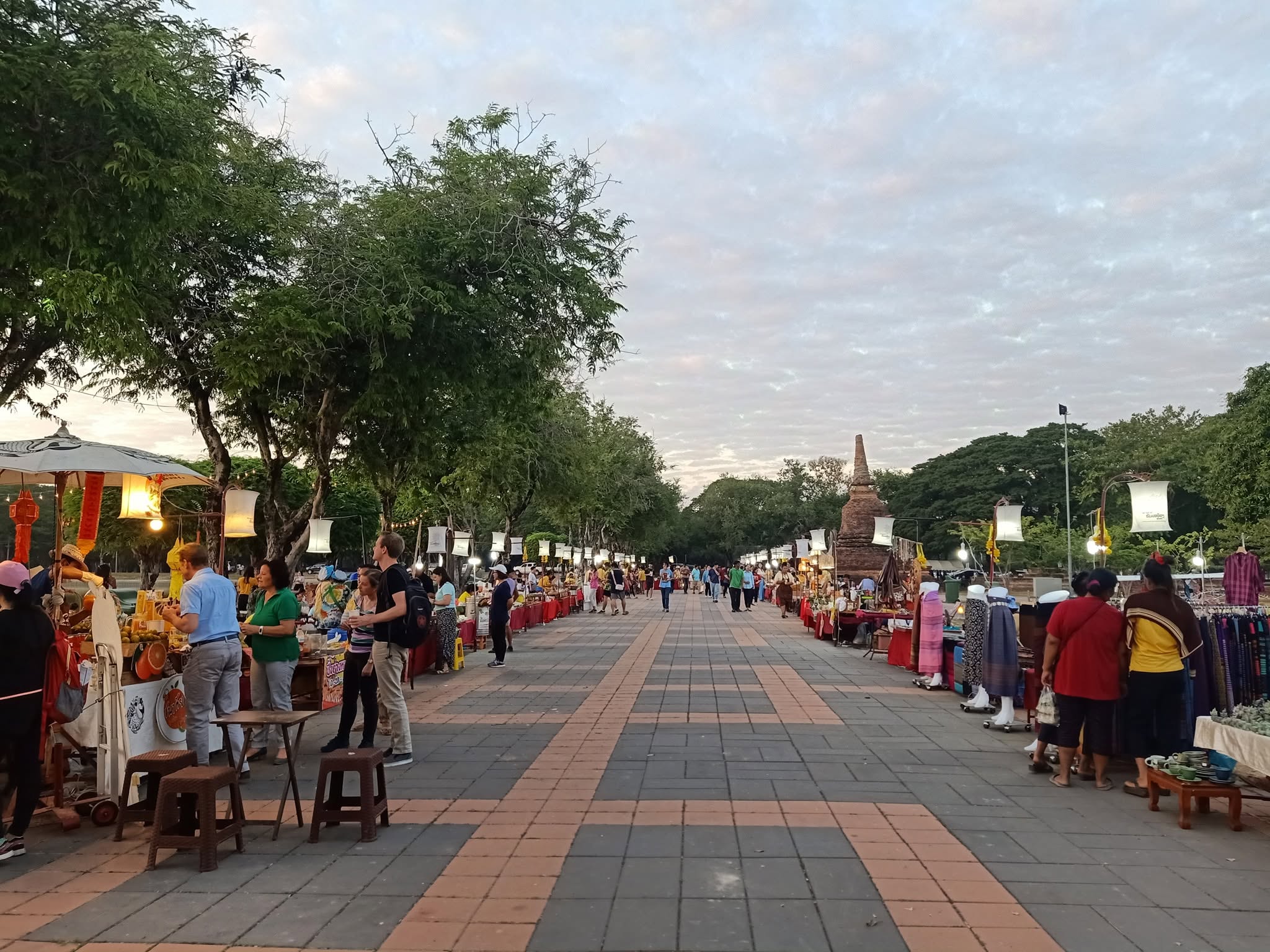
Near the main entrance, vendors sell krathong through the evening. Some are traditional banana-leaf constructions assembled by hand. Some are made from bread, which disintegrates naturally and feeds the fish. Some are elaborate arrangements of jasmine and marigold built around a carved core — the work of a skilled craftsperson — and carried carefully to the water's edge by someone who has been thinking about this moment all year. Choosing a krathong is not a casual transaction. It is the first part of the ceremony.
The Ceremony of Floating
The ceremony is simple. You light the candle and the incense. You hold the krathong at the water's edge — kneeling, if you can — and push it gently away. The tradition holds that whatever you release into the water goes with it: a worry, an old mistake, a debt of feeling carried too long. The candle burning down is the measure of what you have offered. Whether this means something or is simply a beautiful act on a beautiful night is the question the ceremony invites you to sit with.
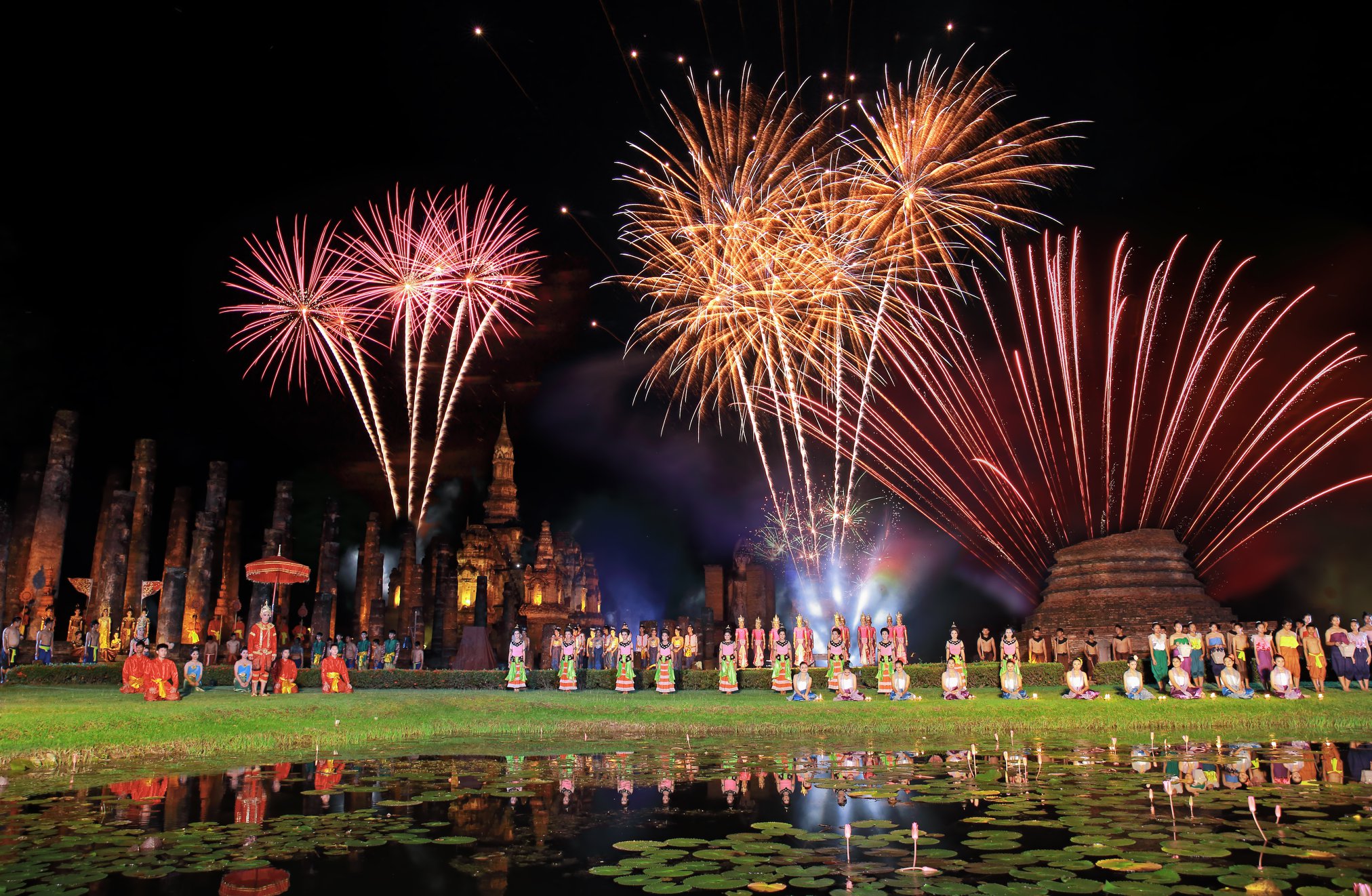
Alongside the floating krathong, traditional performances take place on the central nights of the festival. The khon masked dance, performed by troupes from the provincial arts school, draws on the Ramakien epic — Thailand's adaptation of the Ramayana, staged in elaborate gold costume with each character's identity encoded in the shape and color of their mask. On the peak night, fireworks are launched from behind Wat Mahathat, exploding above the pagodas and mirrored in the moats below. The crowd that has gathered along the water's edge watches in silence between bursts.
When and How to Visit
Loy Krathong falls on the full moon of the twelfth lunar month — in practice, a date in November that shifts each year. In Sukhothai, the celebration typically extends for three to seven days centered on the night of the full moon itself. The central zone of the Historical Park is at its most crowded on the peak night, particularly around Wat Mahathat and the main moat. The experience rewards arriving early. Cycling to the park from the resort in the late afternoon — reaching the eastern gate by 4:30 or 5:00pm — gives time to find a position along the water before the crowd builds from the west gate.
The hour between 6:00 and 7:00pm is the most compelling: the sky still holds the last of the day's light above the treeline, the oil lamps along the pathways have been lit, and the krathong on the water are just beginning to be visible against the dusk. By 8:00pm the park is at its most spectacular. By 10:00pm the crowd thins and the moat at Wat Sa Si returns to something quieter — the candles drifting, the stone above darkening again, the full moon overhead doing the work it has done here for seven centuries.
Traveler Tip
Loy Krathong dates shift each year — confirm the festival calendar before booking. Accommodation fills several months in advance for the festival period; reserve early. Arrive at the Historical Park no later than 5:00pm to find your position by the moat before the crowd builds. Bring cash: krathong vendors, food stalls, and park entrance tickets are all cash-only. For the best combination of ambient light and candlelight, the window between 6:00 and 7:00pm is your prime hour for photographs.
Whatever you release into the water goes with it. The candle burning down is the measure of what you have offered.
Visitor Information
Plan Your Visit
Distance from Resort
The Sukhothai Historical Park is 1.7 kilometres from Sriwilai — a four-minute bicycle ride.
Best Time to Visit
Full moon of November. Arrive by 4:30–5:00pm; the finest light falls between 6:00 and 7:00pm.
Getting There
Complimentary bicycles are available from resort reception from the early afternoon. The front desk team can confirm the year's festival dates and advise on the best route to the park's eastern entrance.
What to Bring
- Cash for krathong, food stalls, and park entrance tickets
- Light layers for cool November evenings
- Walking shoes for uneven stone paths
- Camera — prime photography window is 6:00–7:00pm
Sriwilai Sukhothai Resort & Spa
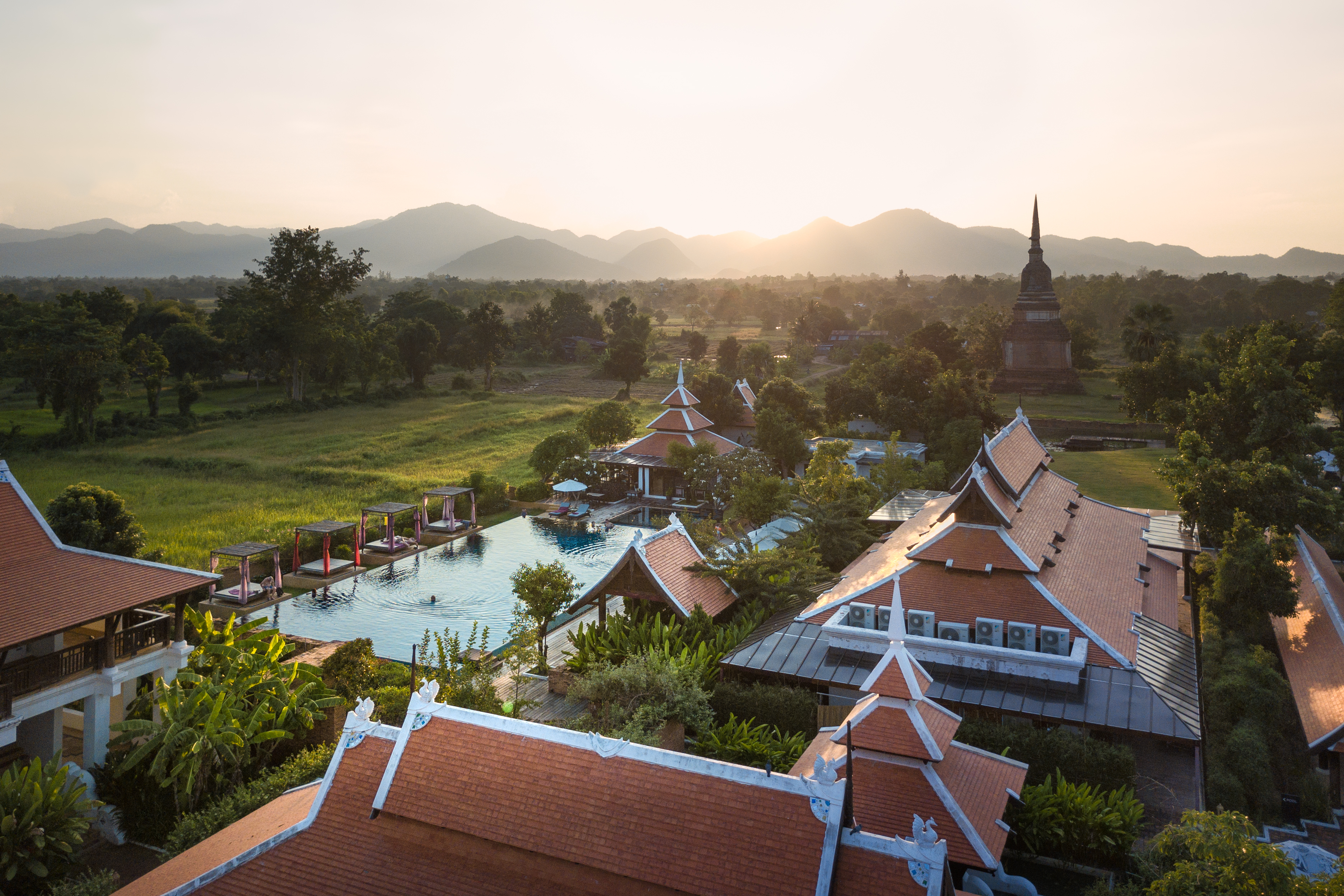
Stay 1.8 km from the ruins.
Wake before sunrise. Cycle to the park. Return for breakfast.