
Local Experiences
An Evening at Tha Nam Rap Sadet Market
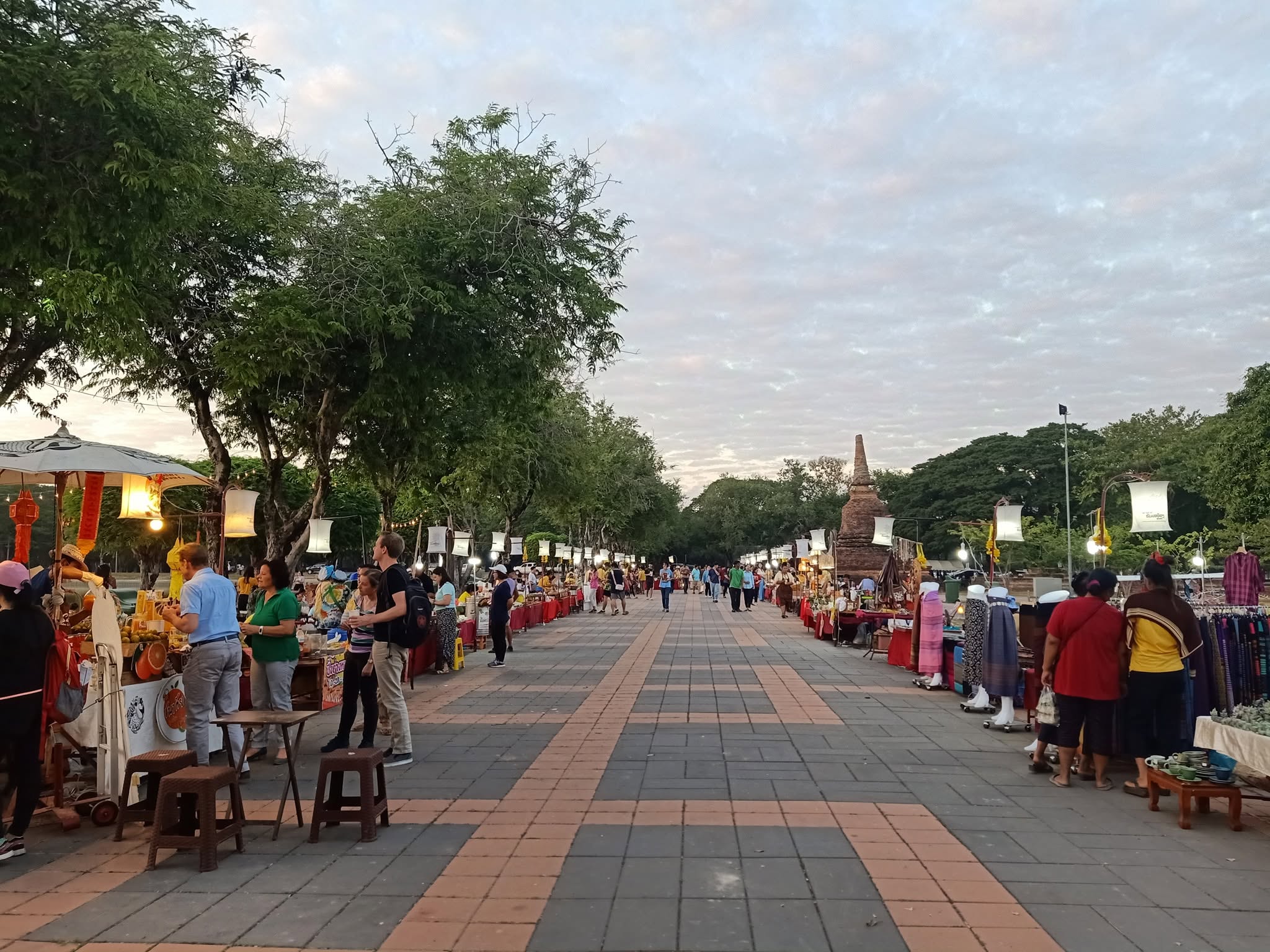
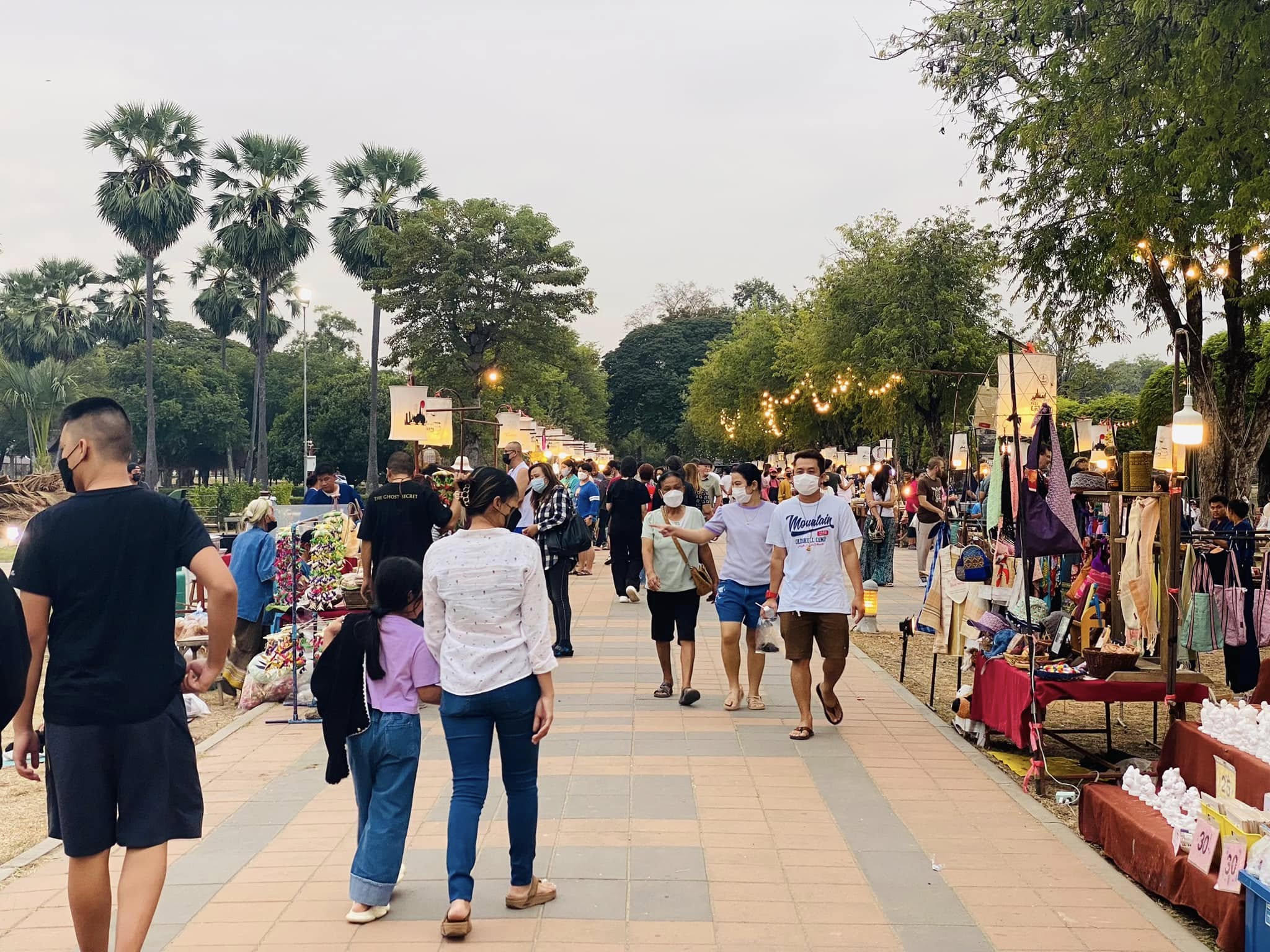
On Friday and Saturday evenings, the broad promenade beside the ancient city's eastern moat fills with stalls, lanterns, and the smell of lemongrass on a grill. The Tha Nam Rap Sadet market runs from late afternoon until dark, when the chedi at the end of the boulevard is lit from below and the sound of live music carries across the water. It is one of the more pleasant hours available in any city in Thailand.
A Market Beside the Ancient City
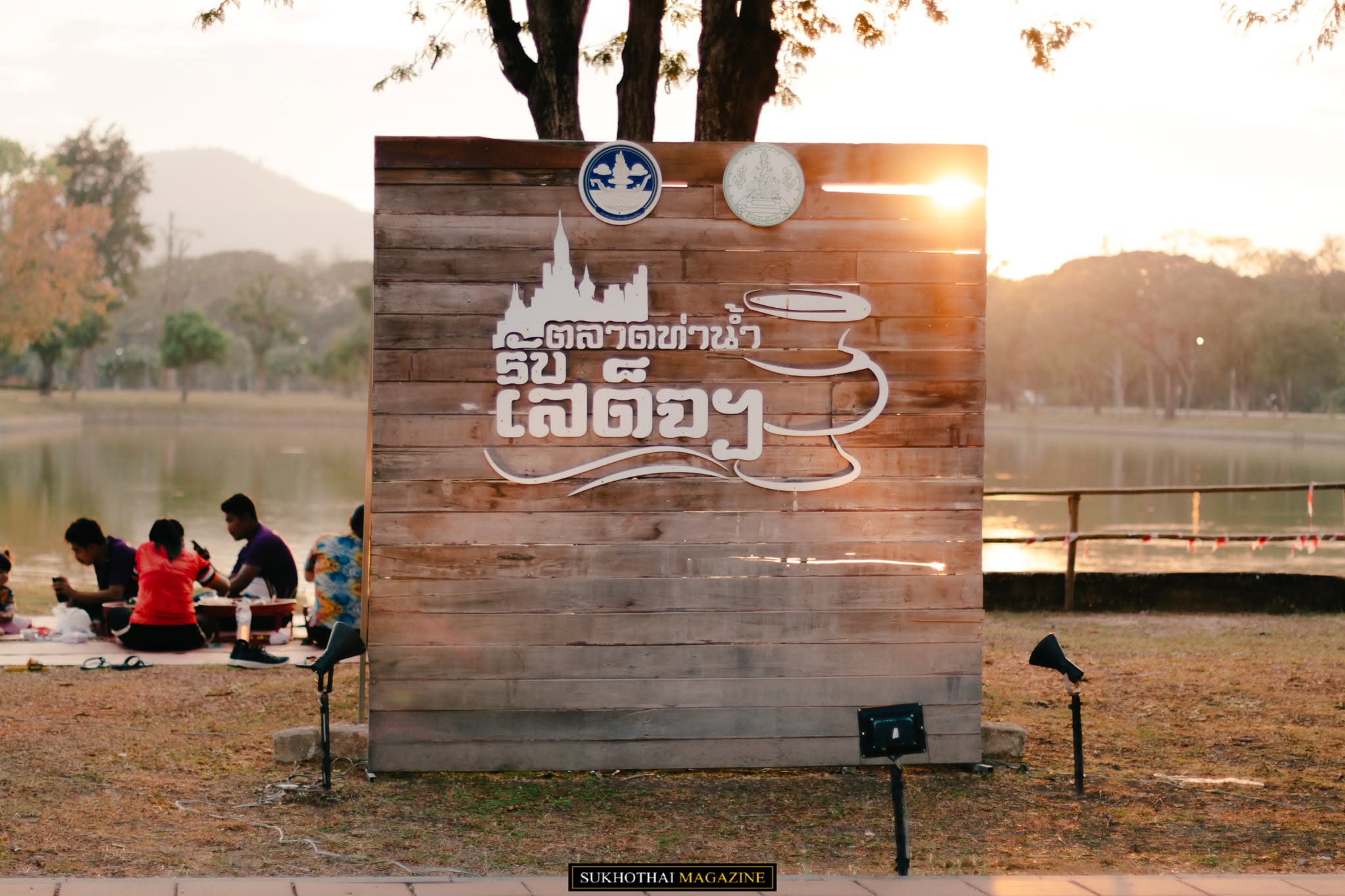
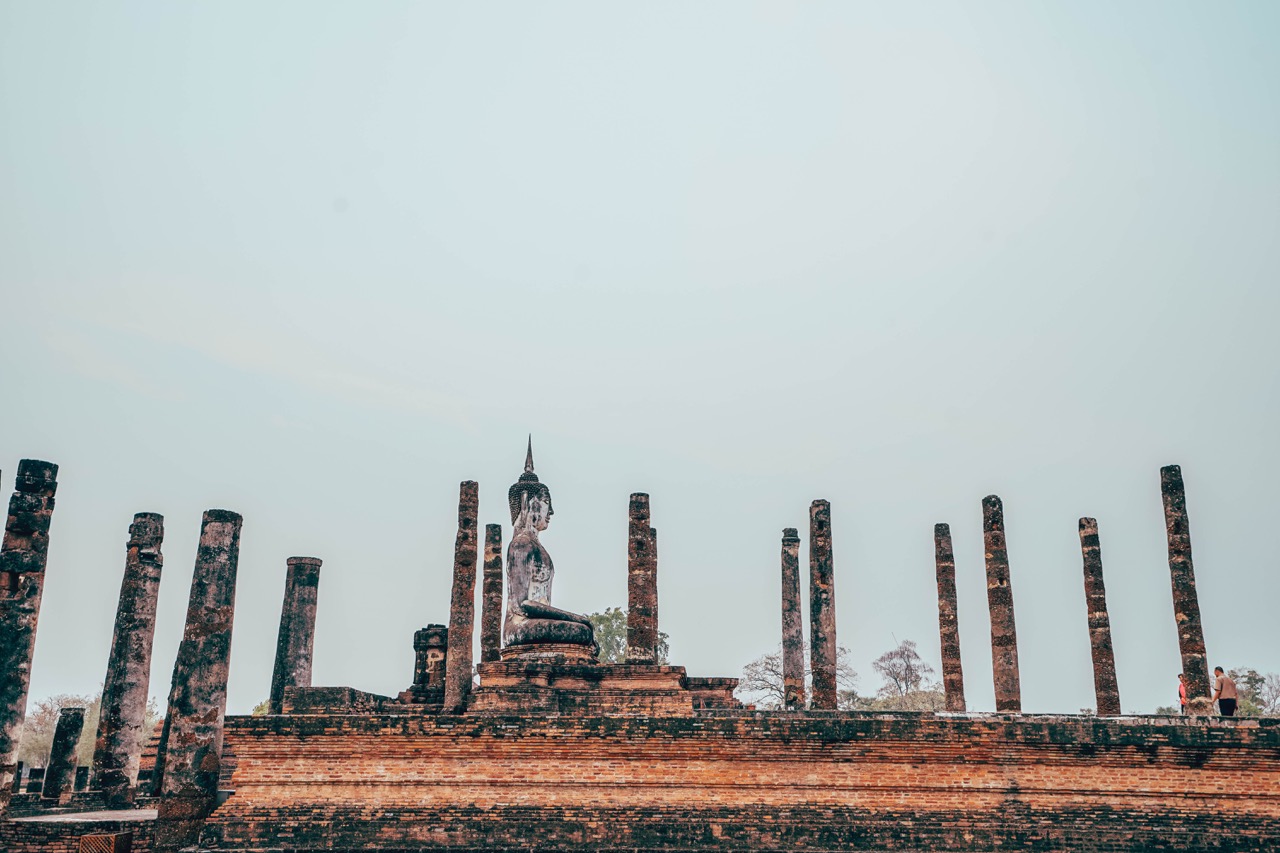
Tha Nam Rap Sadet — "the water that receives royalty" — is the name given to the canal running along the eastern face of the Sukhothai Historical Park. On weekend evenings from approximately 4:30pm, a market assembles along the promenade that parallels it: two rows of stalls extending several hundred metres from the park's main entrance, shaded by tamarind trees, lit with lanterns, selling a combination of street food, local craft, and produce that reflects the specific agricultural character of this part of the north. The ruins of a small chedi are visible at the far end of the avenue, framing the view with a reminder of what the ground underfoot contains.
The market runs on Friday, Saturday, and Sunday evenings, and is most animated in the hour before the light goes. Locals arrive by motorcycle and bicycle from the surrounding villages; the stalls drawing the longest queues are usually those selling fresh khanom — traditional sweets that require considerable technique and sell quickly. The rhythm of the place is unhurried and local. It is not designed for tourists, which is precisely what makes it worth attending.
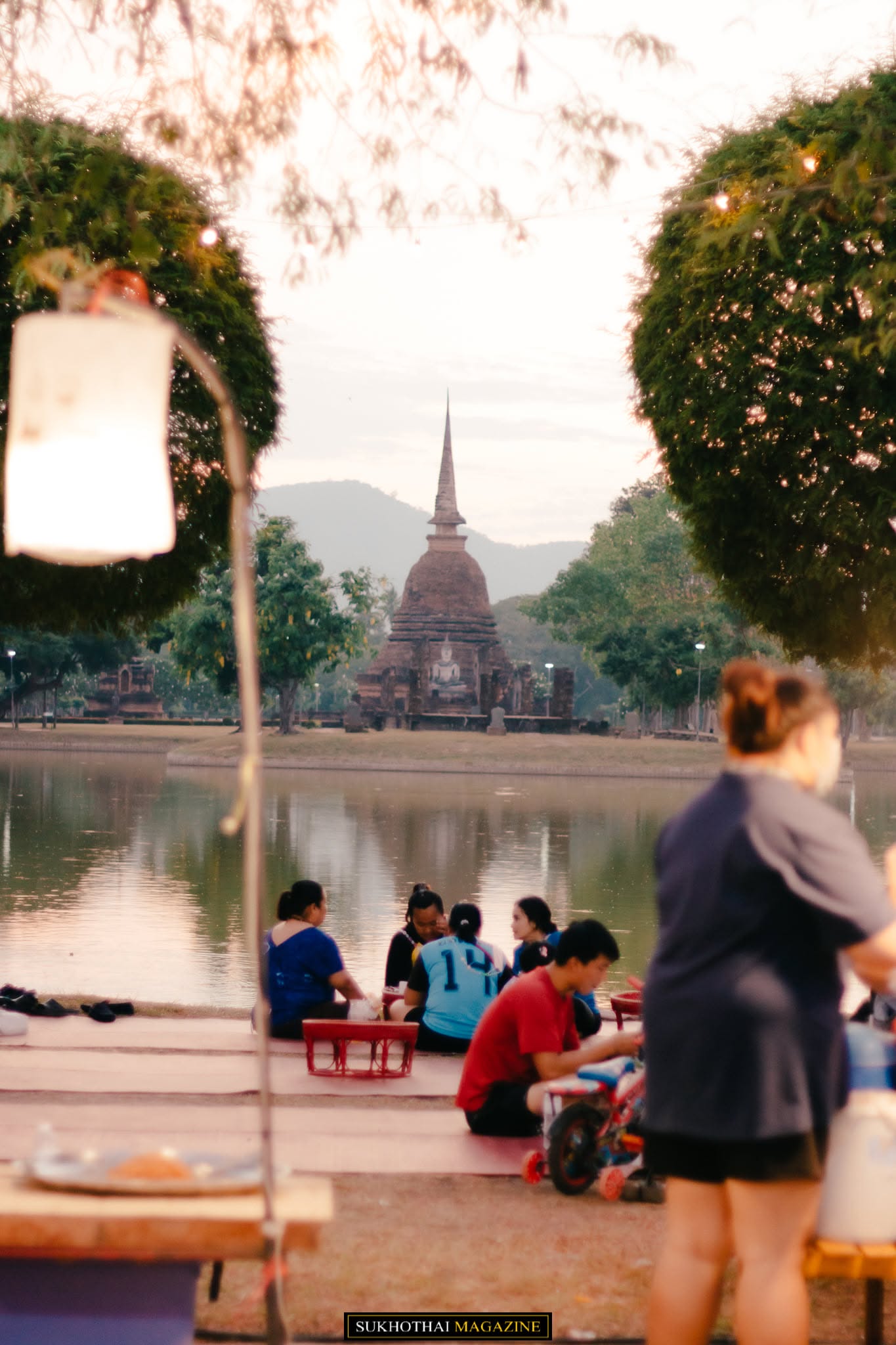
Photos courtesy of FB: Sukhothai Magazine
Flavours of Sukhothai
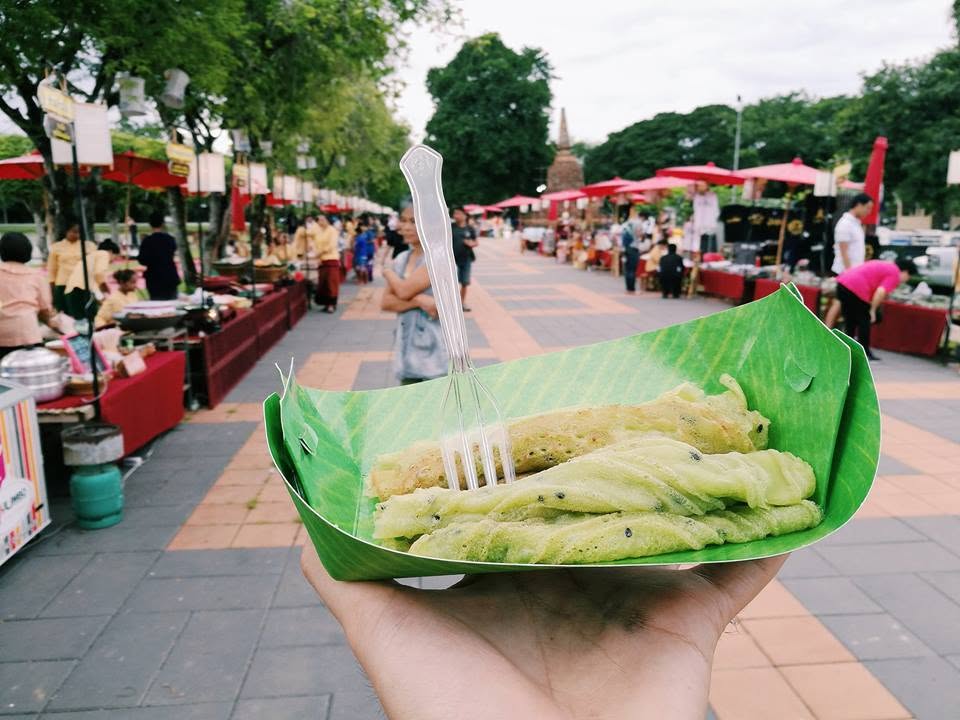
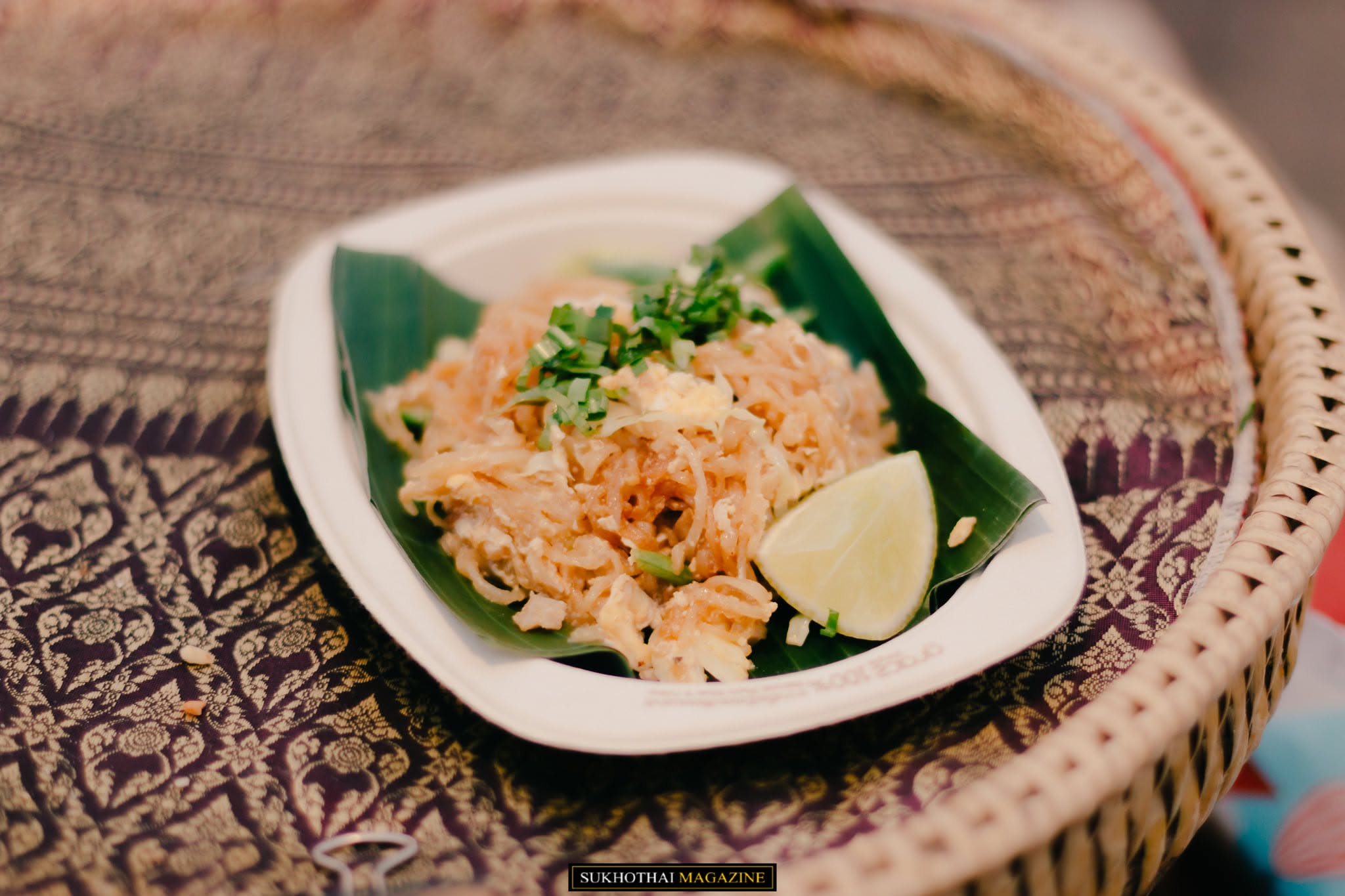
The food at the market skews toward things that are difficult to find in a restaurant. Khanom bueang — thin crisp crepes filled with sweet or savoury toppings — are made to order on a small griddle and eaten immediately. Miang kham, a one-bite preparation of dried shrimp, toasted coconut, peanut, lime, ginger, and palm sugar folded into a betel leaf, passes from hand to hand at the stall on the market's northern end. The pandan-leaf crepes, served in banana-leaf boats with a small fork, are the most photographed item on the strip.
Several stalls serve dishes specific to northern-central Thai cooking: khao tom mud, rice steamed in banana leaf with black beans or banana; mango sticky rice wrapped rather than plated; fermented sausage sliced and served with raw ginger, dried chilli, and small purple shallots. The palm sugar sold near the entrance comes from palms grown in the villages west of the Yom River. The galangal in the curry pastes was harvested this week from a garden ten minutes from where the stall stands. The distance between field and plate here is very short.
Khantoke by the Water
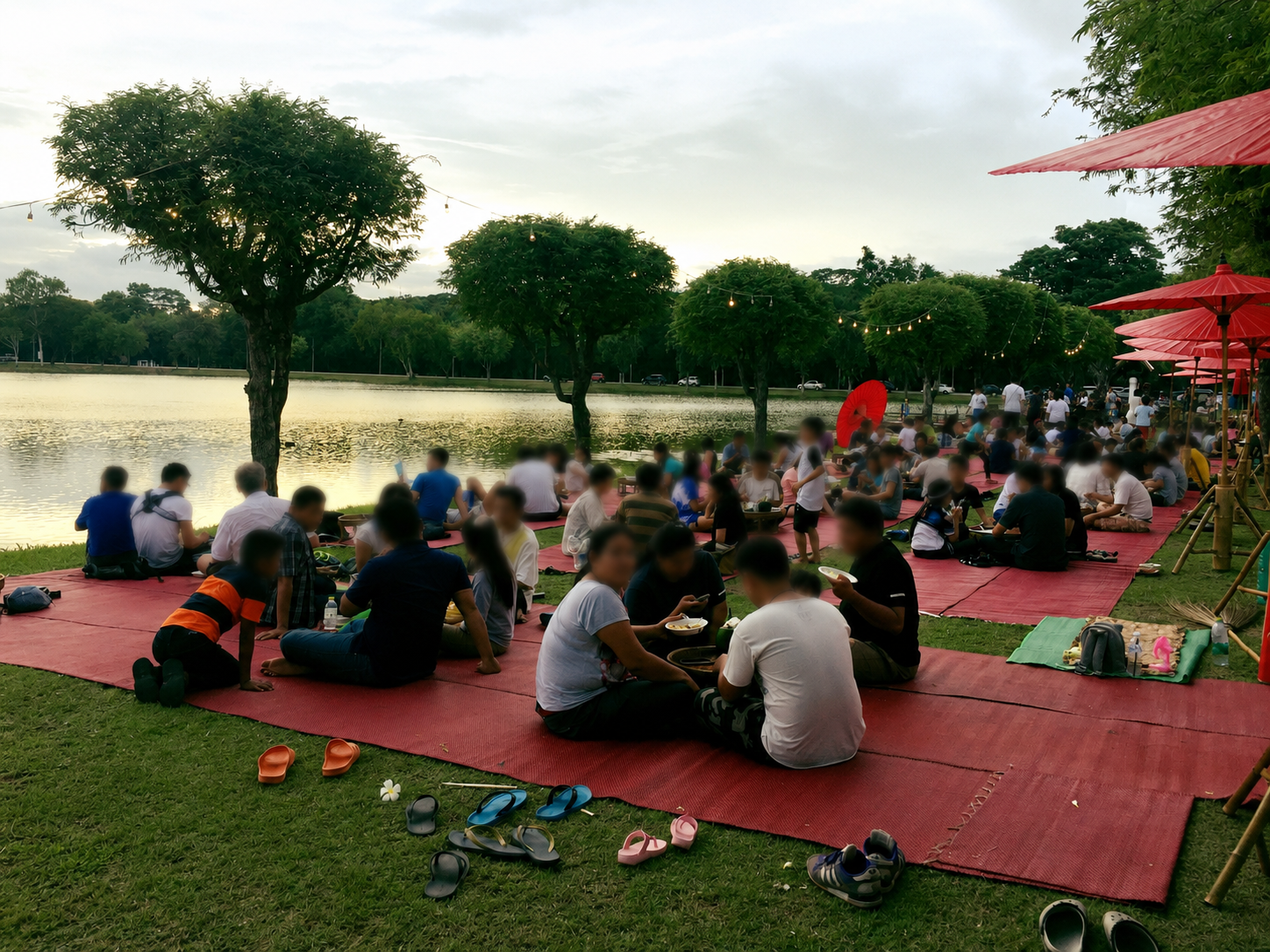
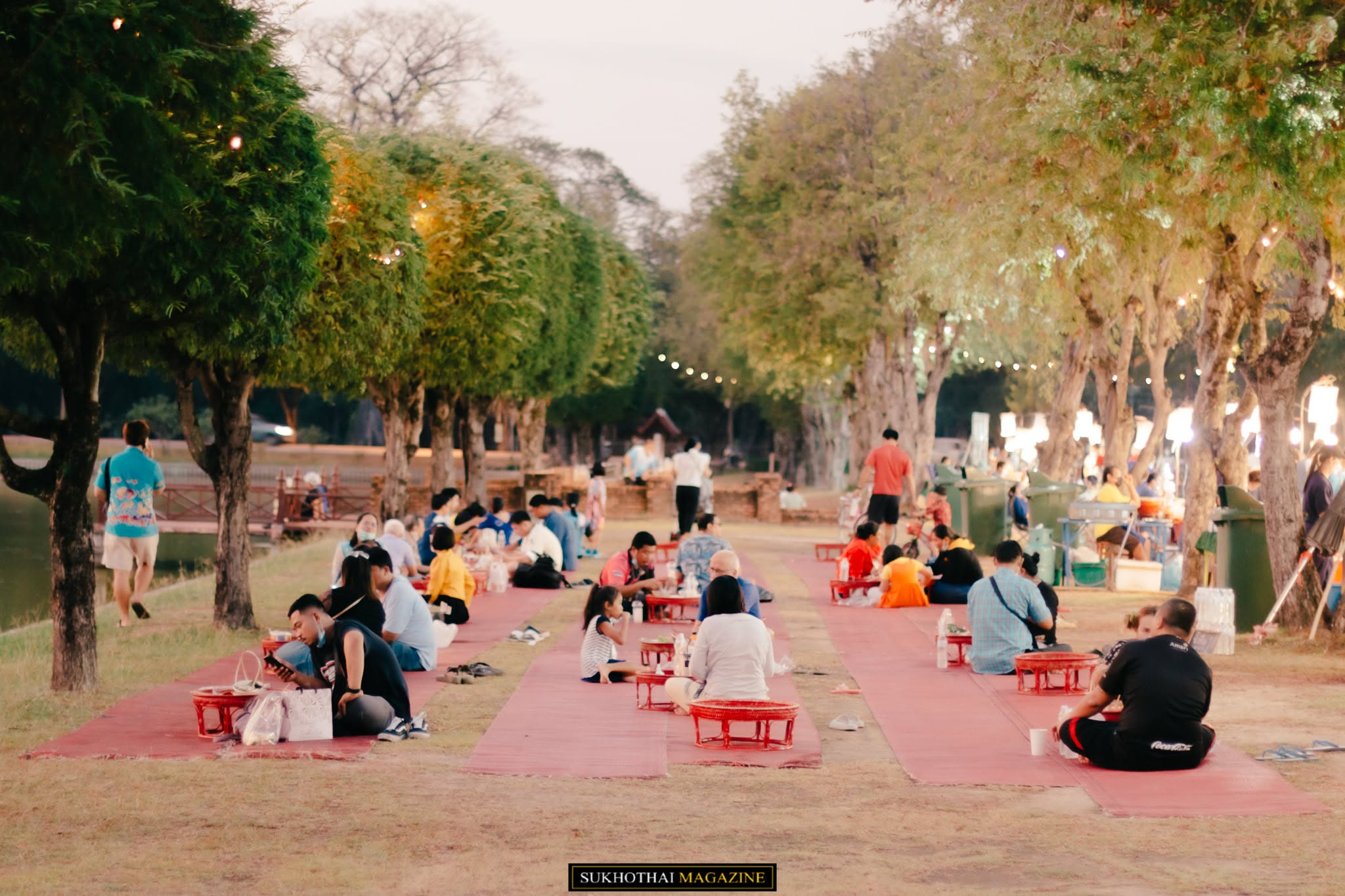
At the far end of the market, where the promenade meets the waterfront, a different arrangement takes shape on weekend evenings. Red mats are spread on the grass beside the moat. Low tables are set with plates of food — there is no menu and no ordering, only an evolving spread that the hosts replenish throughout the evening. This is the khantoke format: communal, floor-level, unhurried, derived from the northern Thai tradition of sharing food from a single elevated tray. Here it unfolds beside open water, with the ancient city visible across the surface and the last of the evening light settling over the hills to the west.
The khantoke section of the market has no fixed start time and no ticket. You arrive, you find a space on a mat, and the food comes without being requested. Live traditional music — typically a small ensemble with a pi nai oboe and a saw duang fiddle — plays from a raised wooden platform set back from the water's edge. The music is not background noise. It is the event, and it continues until the mats are folded and the lanterns are taken down.
Traveler Tip
The market runs Friday through Sunday from approximately 4:30pm and closes when the food runs out — usually before 9:00pm. Arrive by 5:00pm to eat before the most popular stalls sell through. Bring cash only; no cards are accepted anywhere on the strip. The khantoke area by the water fills quickly — if you intend to sit, arrive earlier rather than later.
The khantoke at the waterfront has no fixed menu and no ticket. You find a space on the mat, the food arrives, and the music begins.
Visitor Information
Plan Your Visit
Distance from Resort
The Tha Nam Rap Sadet market promenade is approximately 1.8 kilometres from Sriwilai — a five-minute bicycle ride.
Best Time to Visit
Friday, Saturday, and Sunday evenings from 4:30pm. The hour between 5:30 and 6:30pm — just before dark — is the best time to be there.
Getting There
Bicycles are available from resort reception. Follow the road parallel to the eastern moat of the Historical Park; the market entrance is at the park's main gate.
What to Bring
- Cash — no card payments accepted at any stall
- A light layer for the cooler evening air
- An appetite — arrive before 5:30pm for the best selection
Gallery
Photos courtesy of FB: Sukhothai Magazine

Sriwilai Sukhothai Resort & Spa
Stay 1.8 km from the ruins.
Wake before sunrise. Cycle to the park. Return for breakfast.