
Local Experiences
Pottery & Craft Workshop in Sukhothai
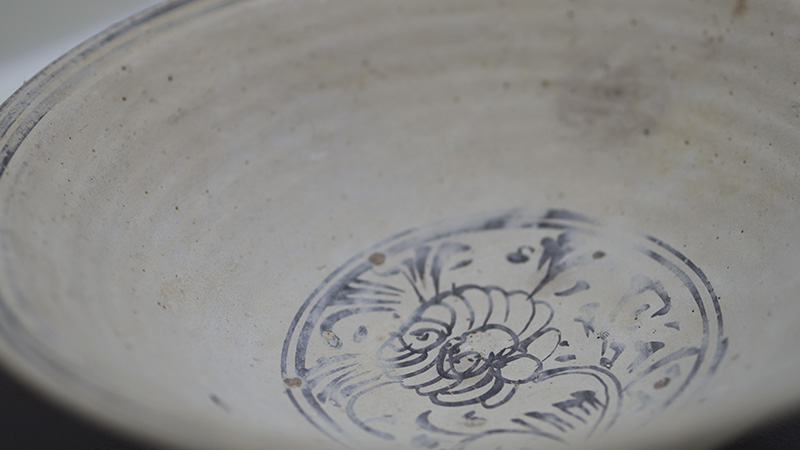
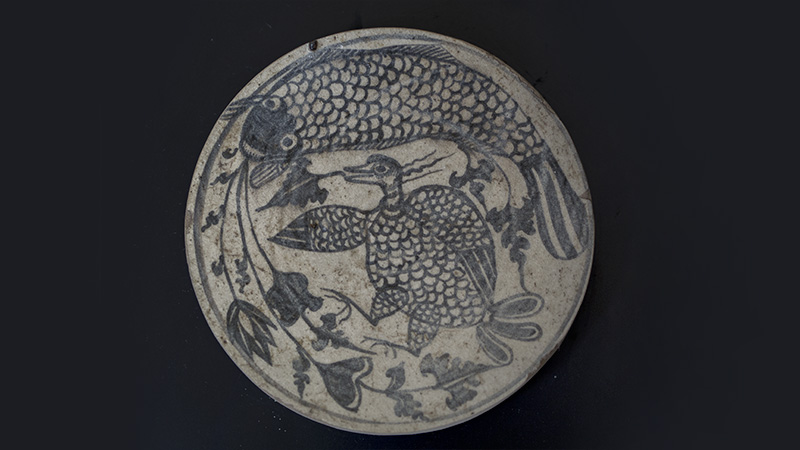
Sukhothai was once one of the most prolific centres of ceramic production in medieval Southeast Asia. Its kilns fired tens of millions of pieces traded throughout the region and beyond. The tradition is called Sangkhalok ware, and its most recognisable motif is the kadam: a stylised black carp drawn in a single continuous line before firing. Workshops in Sukhothai today keep this tradition alive, piece by piece, at the speed of a hand.
The Sangkhalok Legacy
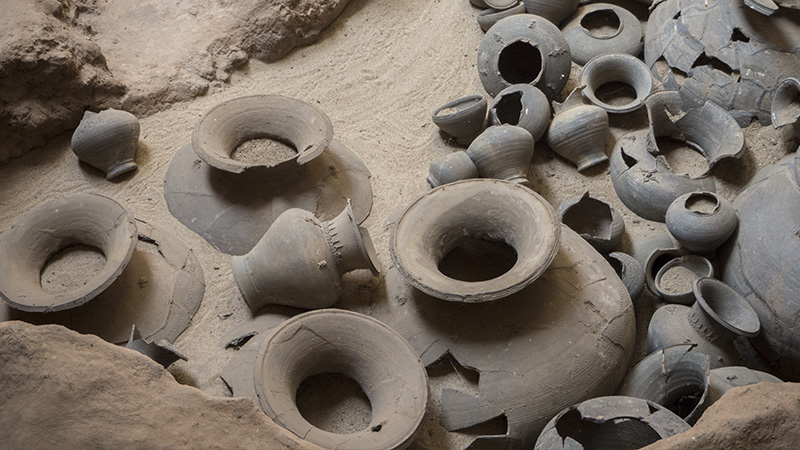
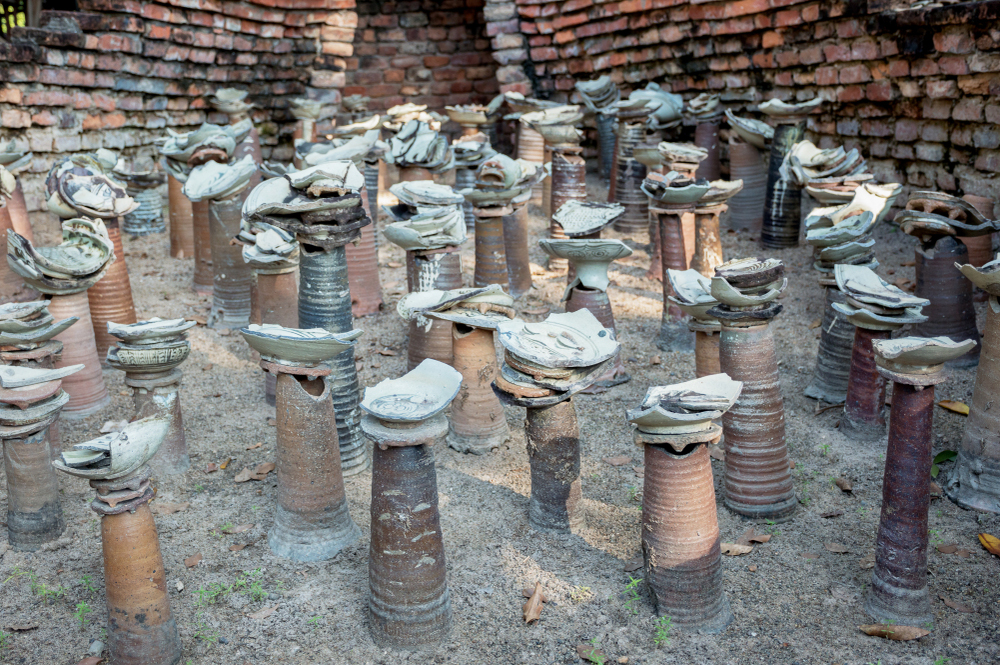
The kilns of Si Satchanalai — a city within the extended Sukhothai kingdom, forty kilometres to the north along the Yom River — produced pottery from roughly the 13th to the 17th century. At their peak, more than two hundred kilns operated in the Sangkhalok district, firing celadon and underglaze black wares in quantities that made them a significant trade commodity. Sukhothai-ware pieces have been recovered from archaeological sites across Thailand, the Philippines, Borneo, and Indonesia — and from the wrecks of trading vessels that carried them across the Gulf of Thailand.
The scale of production was extraordinary for its time, and the evidence is still being excavated. Kiln sites along the Yom River continue to yield sherds and intact pieces from deposits that were buried when the industry collapsed in the late Ayutthaya period. What the kilns left behind is a record not just of technical skill but of a commercial network that connected this small city to the wider world of medieval trade. The fragments in the ground are the invoices.
Learning the Kadam
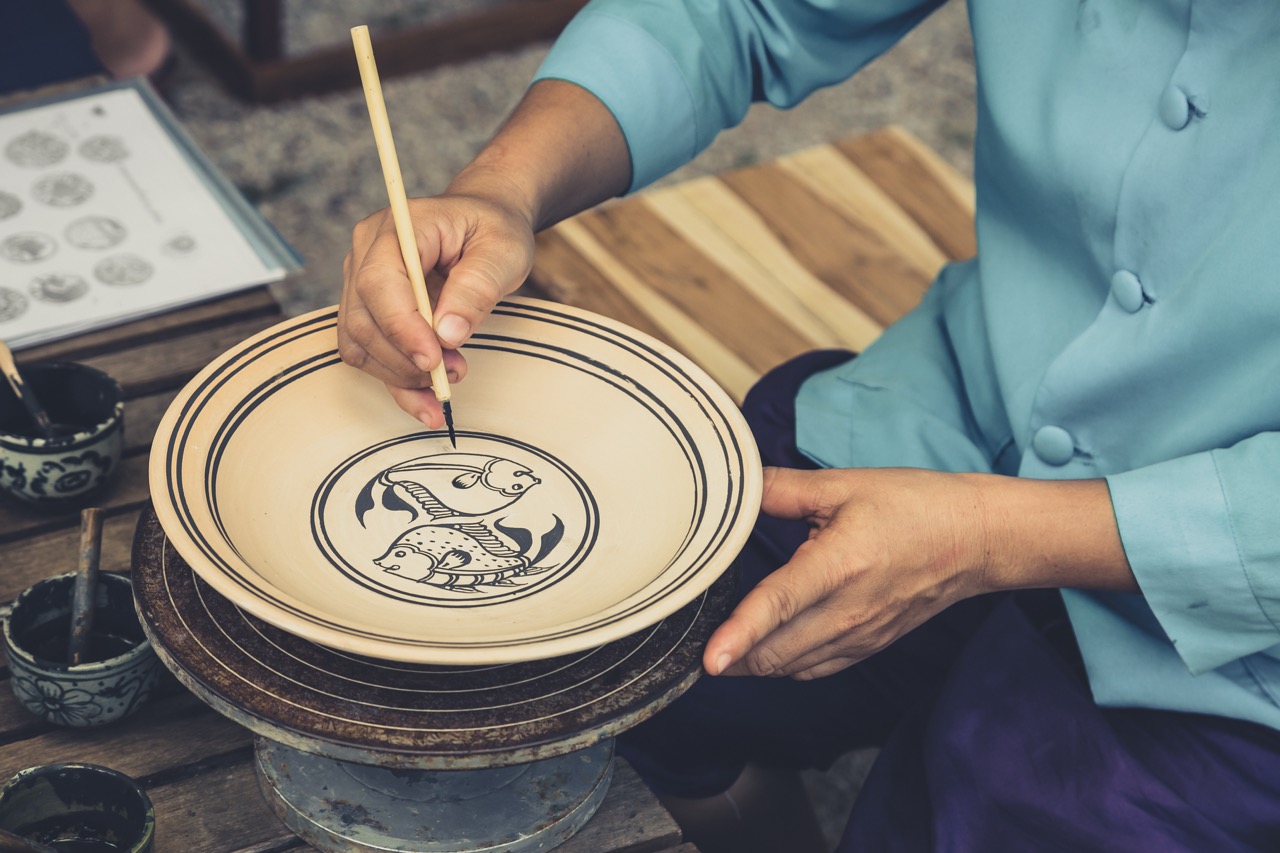
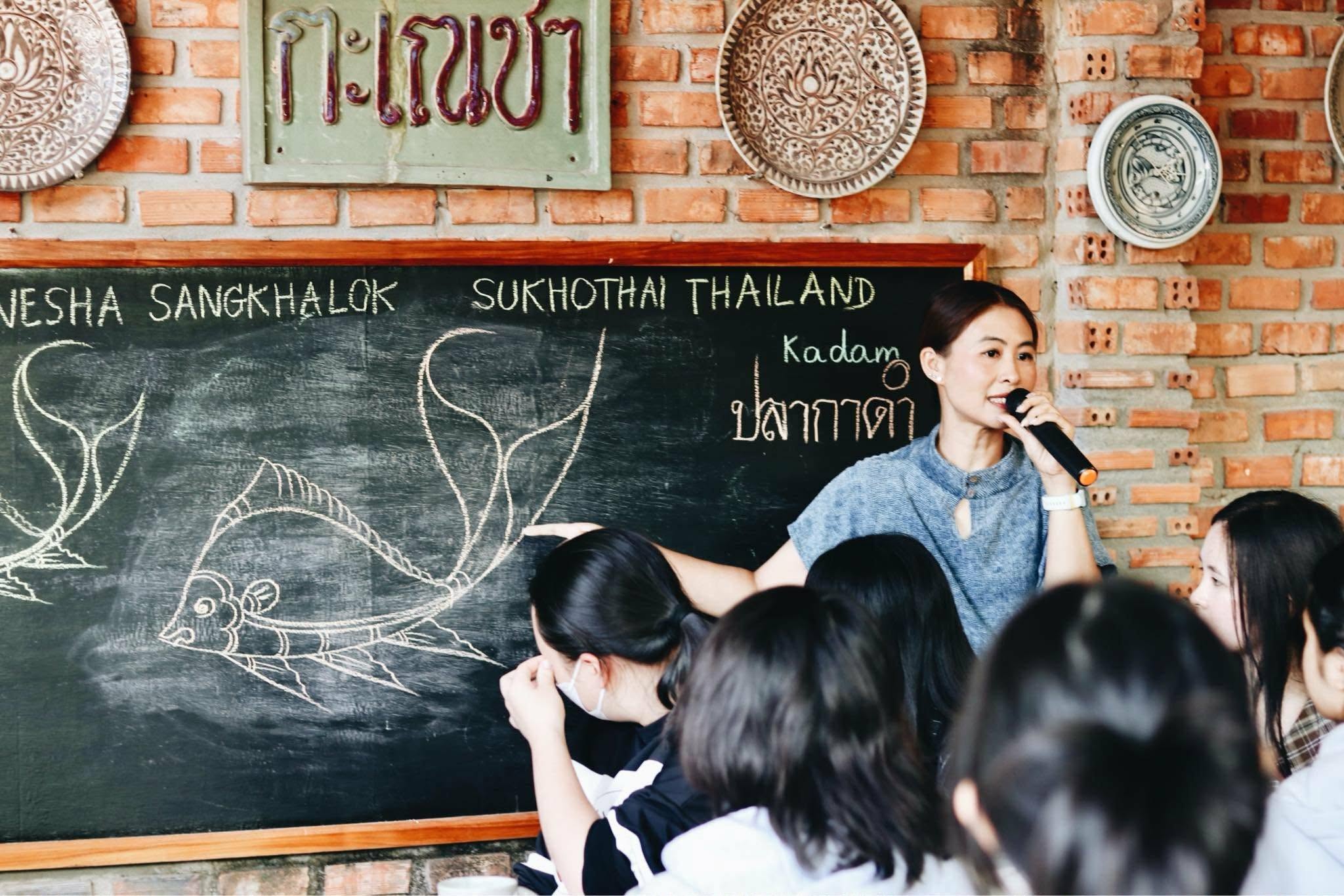
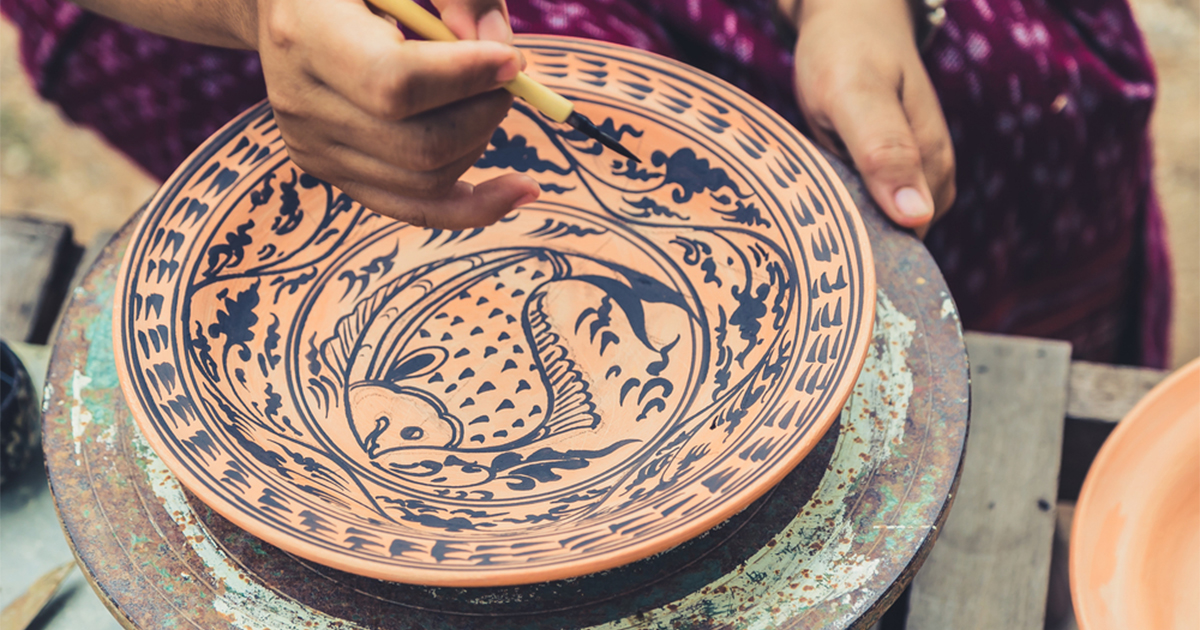
The characteristic motif — the kadam, or ink-black carp — appears on plate after plate in a tradition so consistent it is identifiable at a glance across seven centuries. The fish is never quite the same twice. It is drawn freehand by a painter working from memory, not a template, with a fine-haired brush and black iron oxide slip before the first firing. Workshop sessions arranged through Sriwilai's concierge typically begin with a short introduction to the vocabulary of Sangkhalok ware: an instructor draws the construction of the kadam on a chalkboard before anyone touches clay.
Participants work on pre-formed plates — air-dried unfired clay, smooth and slightly cool to the touch. The brush charges with black slip and the first stroke pulls across the surface. The clay absorbs the pigment immediately; there is no correcting a line once it is laid. This is not a craft that rewards impatience. Most first attempts produce something legible as a fish. Some produce something considerably better. The instructor moves between participants without interrupting, making small adjustments to grip and brush angle that change the character of the line before the plate goes to the kiln.
At the Wheel
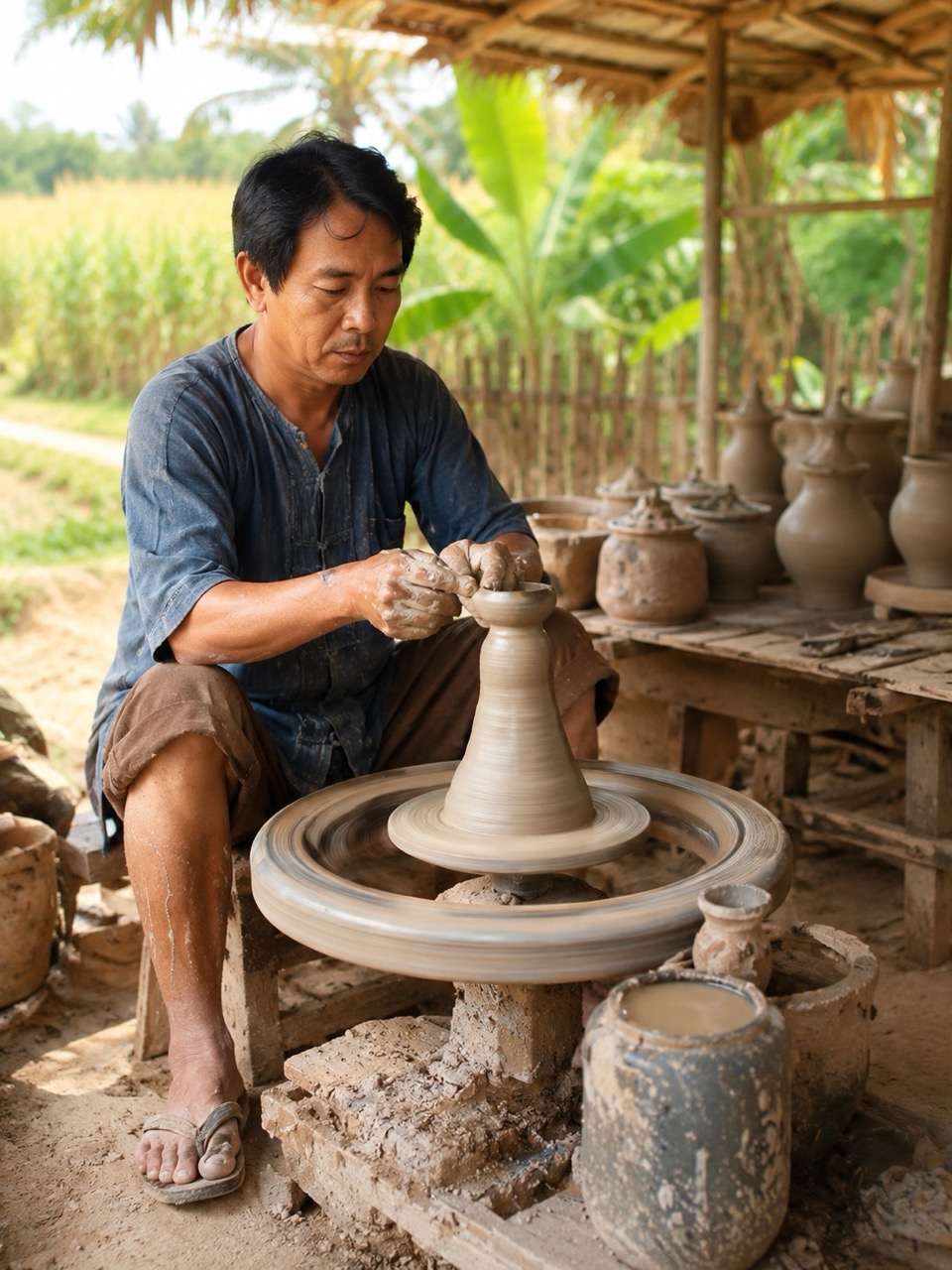
Beyond the painted plate, some workshops offer a session at the throwing wheel — the older and more physical half of the craft. The traditional Sangkhalok wheel is a weighted disc set at ground level, kicked into rotation by foot. The rhythm is different from a motorised wheel: faster to start, slower to sustain, and requiring a coordination between foot, hand, and breath that takes time to find. The clay rises and falls with the hands. First attempts typically collapse before they reach any intended height.
What the wheel teaches is difficult to learn from a description. The clay responds to pressure in ways that are not predictable from the outside: a small increase in grip tightens the wall; a slight release lets it widen. Potters who have worked here for years make these adjustments without thinking. The session runs an hour or more. Most participants leave with one small bowl and a considerably clearer understanding of why the objects recovered from the ancient kiln sites look the way they do — and why the ones that survived intact are worth something.
Meet the Makers
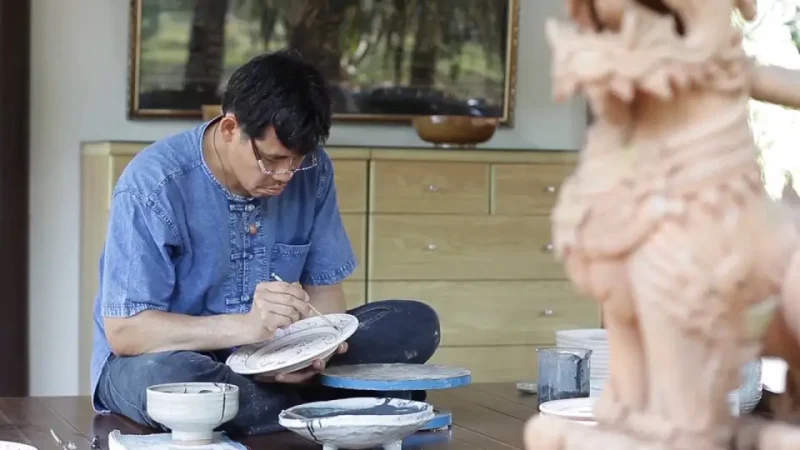
The artisans who lead the workshops come from families with long connections to the Sangkhalok tradition — some stretching back three or four generations to the period when the celadon industry was being deliberately revived in the mid-twentieth century. Their knowledge is specific and local: which clays from the Yom River basin hold the right texture for throwing, which iron oxide concentrations produce the deepest black, how the kiln temperature must be managed at each phase of the firing. The information is not written down in any manual. It passes directly, at the workbench, from one pair of hands to another.
Working beside an artisan for a morning gives a visitor something that a museum collection cannot: the rhythm of the work, the small corrections and adjustments that constitute the craft, the understanding that the objects behind glass were made by people in motion. The Sangkhalok tradition survived several centuries of near-extinction. The reason it survived is that somebody kept teaching it, in a room, to someone sitting close enough to watch.
Traveler Tip
Wear clothes you are comfortable marking with clay and black slip — both stain. Workshop sessions are best arranged a day in advance through the resort concierge; studios close to the resort accept groups of up to six. Finished pieces are fired after the session and can be collected the following morning, or packaged for shipping home.
The kadam is drawn freehand from memory, never from a template. The variation between individual pieces — the slight lean of the tail, the curl of the fin — is what seven centuries of collectors have valued most.
Visitor Information
Plan Your Visit
Distance from Resort
The nearest partner workshop is approximately 3 kilometres from Sriwilai — a ten-minute bicycle ride through the old town.
Best Time to Visit
Morning sessions, typically 9:00–11:30 am. Cooler and quieter before the afternoon.
Getting There
Bicycles are available from resort reception. The concierge team can arrange a private vehicle for groups or guests preferring not to cycle.
What to Bring
- Clothes suitable for clay and pigment staining
- Camera — the workshop is photogenic throughout
- An unhurried morning
Gallery

Sriwilai Sukhothai Resort & Spa
Stay 1.8 km from the ruins.
Wake before sunrise. Cycle to the park. Return for breakfast.