
Local Experiences
Things to Do in Sukhothai
Most visitors come to Sukhothai for the ruins, and the ruins are reason enough. But anyone wondering what to do in Sukhothai beyond the temple walls will find the historical park is only the centre of a much larger picture. Beyond the temple walls is a living countryside — rice fields worked by hand, a pottery tradition unbroken since the 13th century, a daily alms round older than the kingdom's fall, and a weekend market that fills after dark. This is a guide to what fills the hours around the ruins, from first light to last.
In the Park, and Beyond It
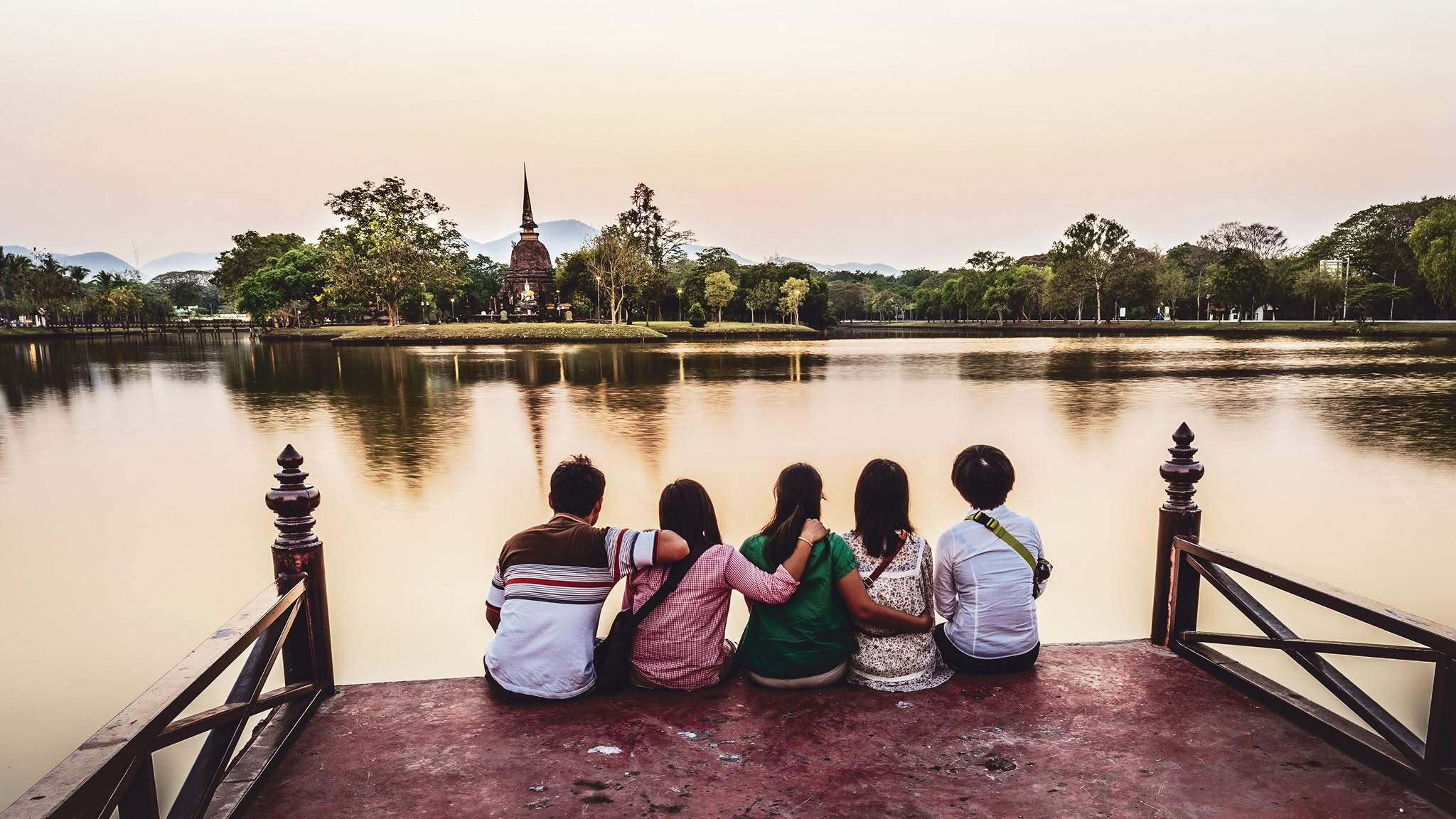
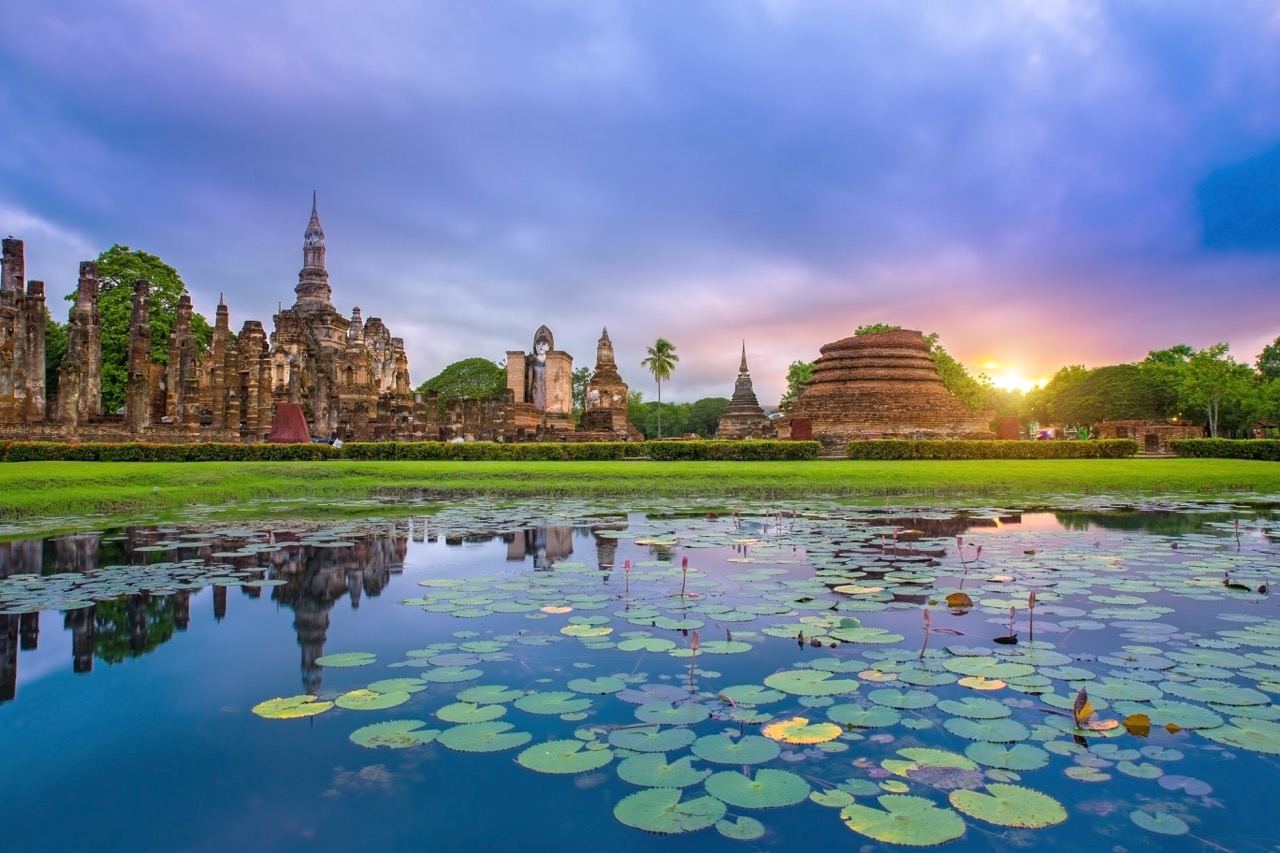
The historical park rewards a slow visit. Arrive before 8am and Wat Mahathat, Wat Si Chum, and Wat Sa Si are close to yours alone — the light low, the reservoirs still, the coach tours not yet arrived. But walking sees only part of the picture.
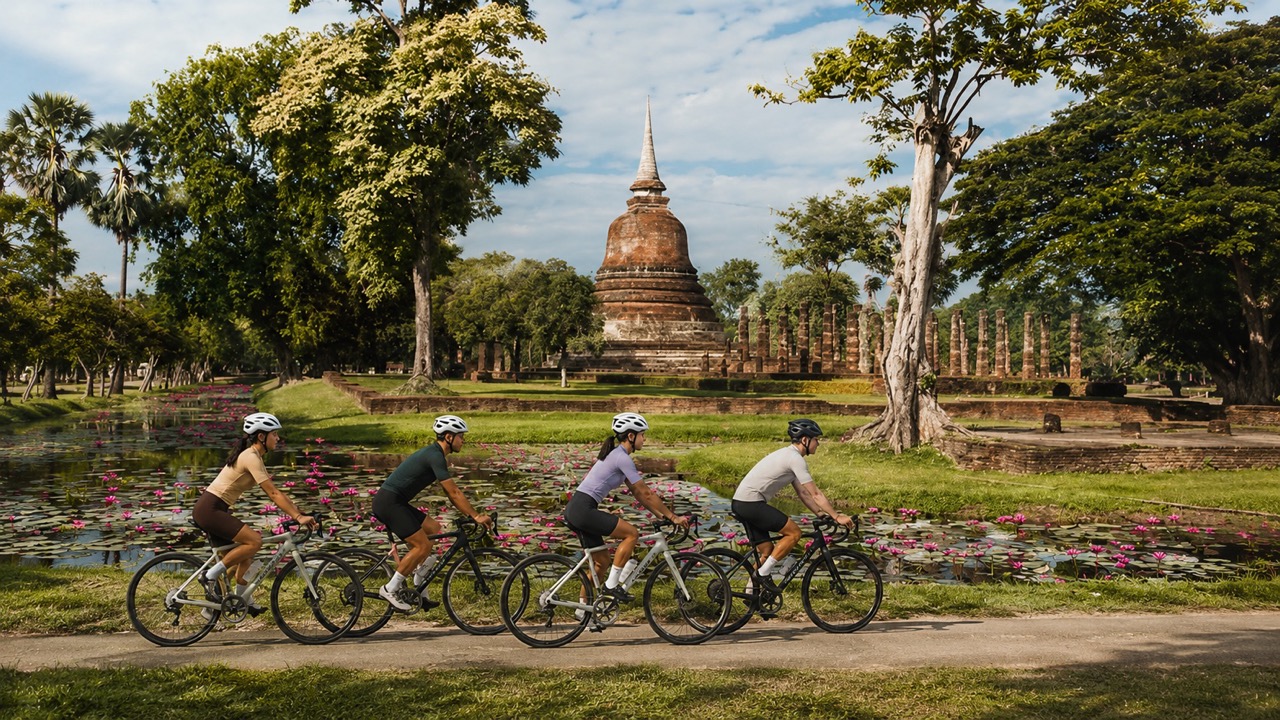
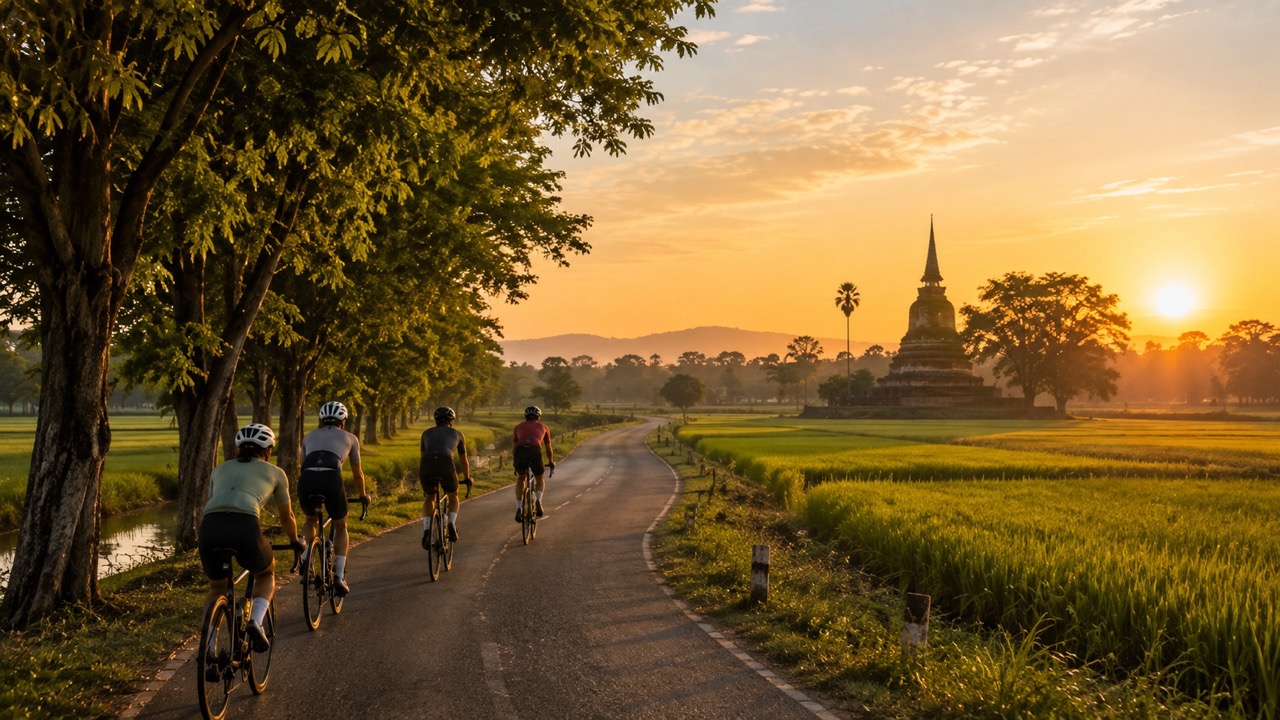
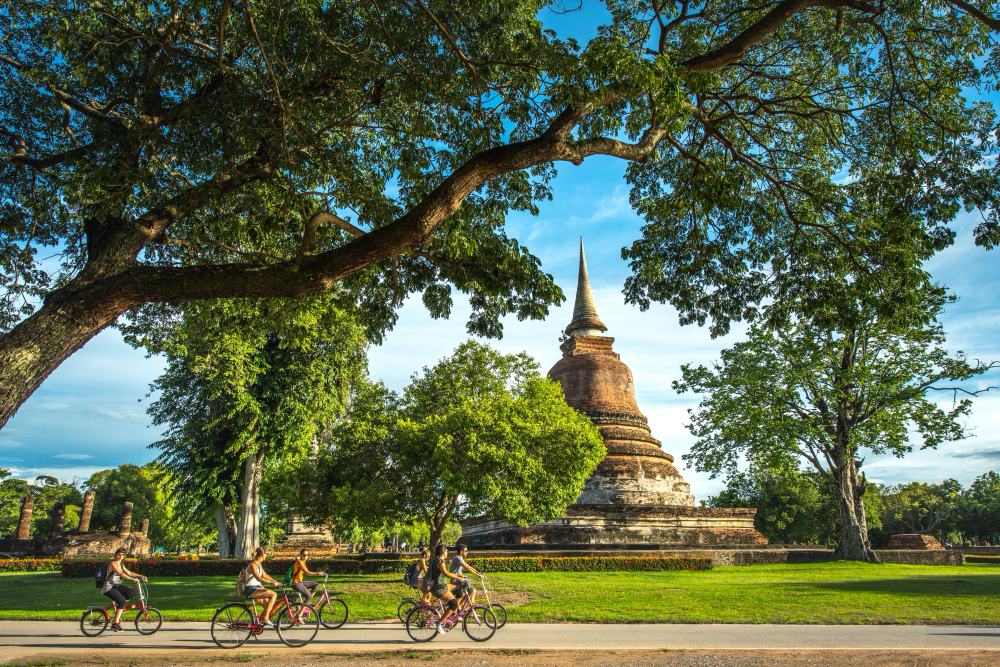
Cycling is the natural way to move through what surrounds it. The terrain is flat, and Sriwilai's bicycles are available from reception from 5:15am. Routes run past rice fields, small villages, and roadside spirit houses before looping back through ruins that appear and disappear behind stands of tamarind and banana — a different, quieter encounter with the same ancient city.
Living Traditions
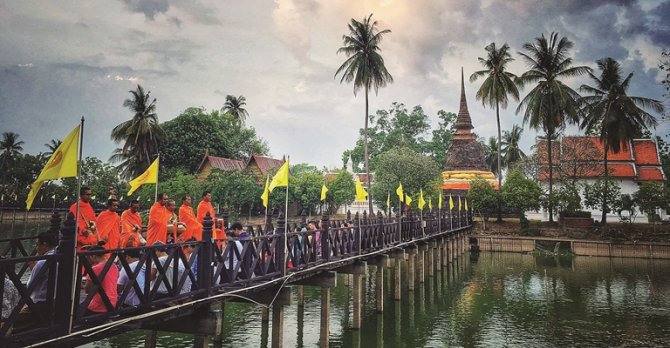
Before the town is fully awake, a line of saffron-robed monks moves along the quiet streets to receive the morning alms. The offering itself takes perhaps thirty seconds; the procession happens every morning without exception, rain or shine, and carries a stillness that predates the ruins themselves.
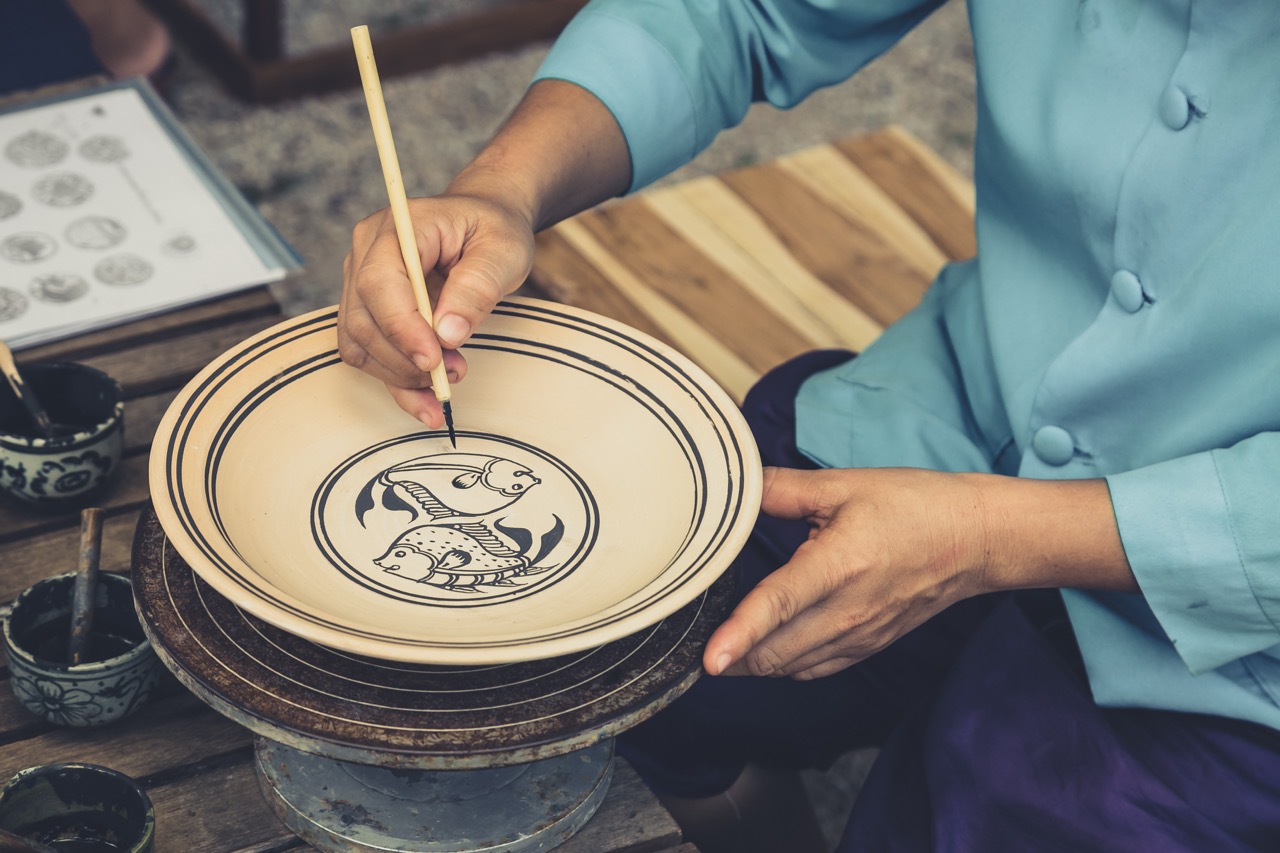
A few kilometres away, the Sangkhalok pottery tradition is still alive in small workshops, where artisans paint the kadam — the black fish motif — freehand and from memory, exactly as it was done when the kilns of Sukhothai supplied ceramics across medieval Southeast Asia. A morning at the wheel or the brush is one of the more direct ways to understand what the ruins produced, not just what they became.
As Evening Falls
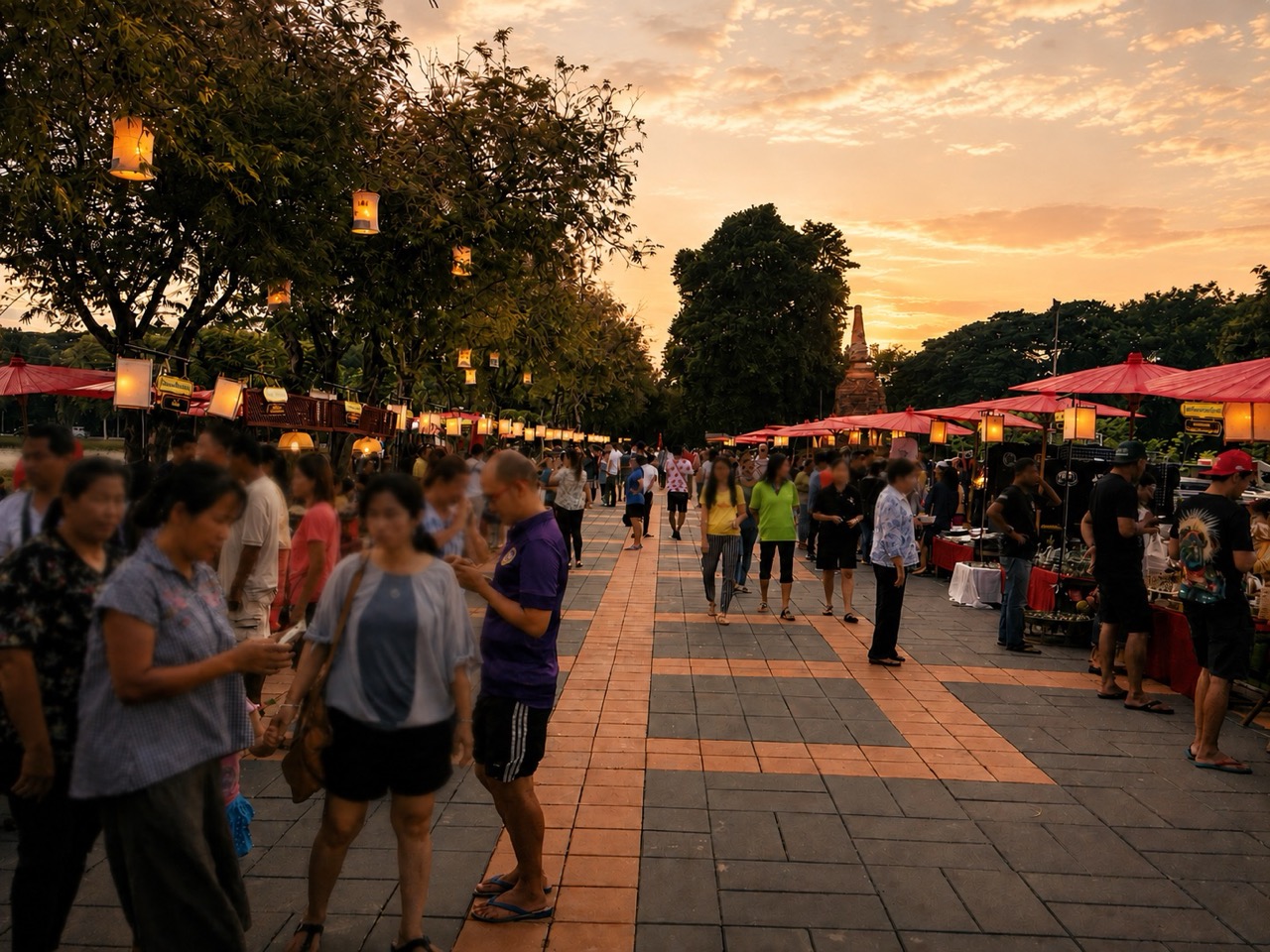
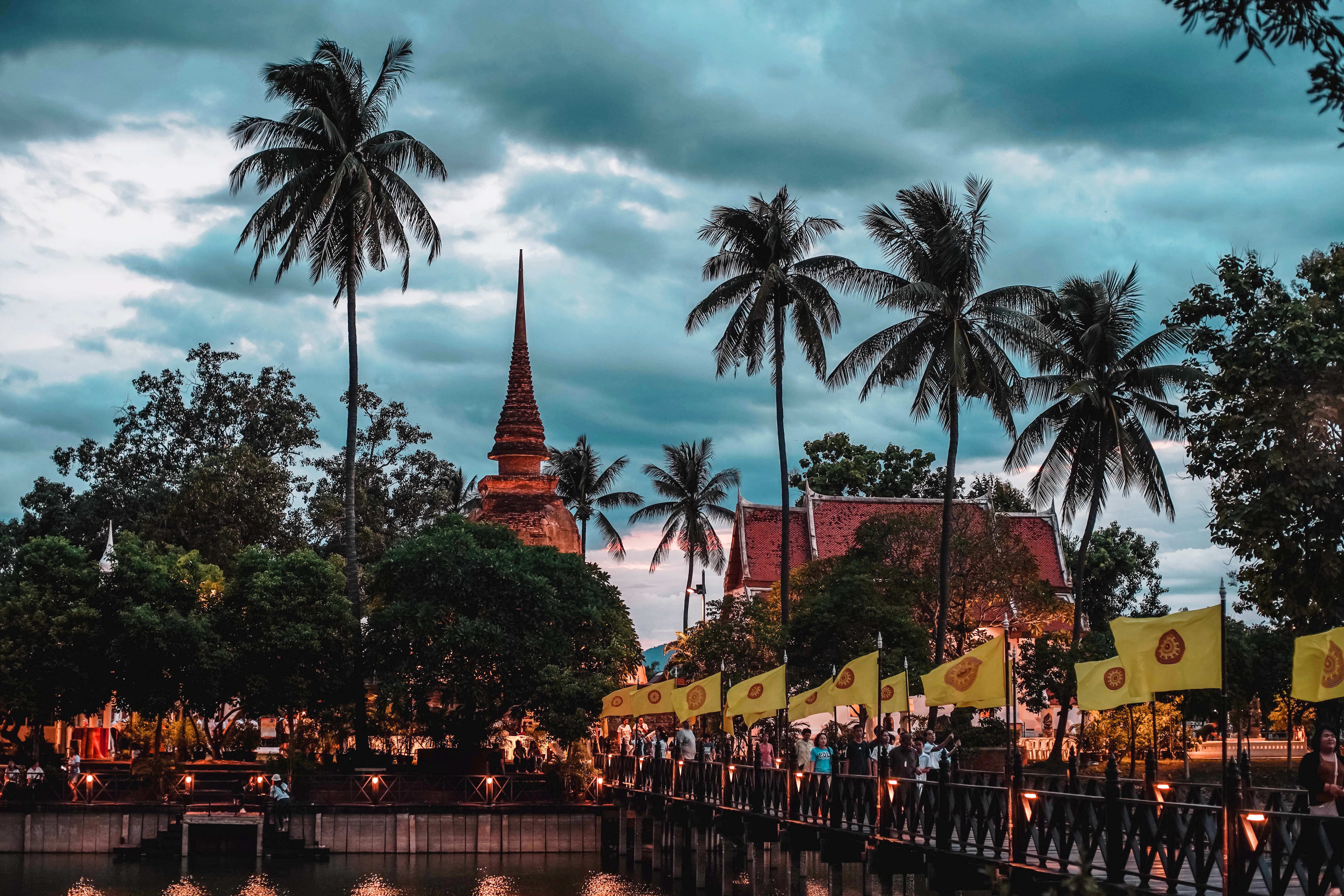
On Friday, Saturday, and Sunday evenings, the Tha Nam Rap Sadet market opens along the promenade beside the eastern moat. Food stalls, craft vendors, and a khantoke dining area by the water run under lantern light until the stalls sell through — usually before nine.
In November, Loy Krathong — a festival born in Sukhothai — fills the ancient moats with candlelight for three nights. For a rainy afternoon or the height of midday heat, the Ramkhamhaeng National Museum holds artifacts recovered from the excavations in air-conditioned, unhurried rooms — a good option in any season.
The ruins are what bring people to Sukhothai. The rice fields, the alms bowls, the potter's wheel, and the lantern-lit water are what bring them back.
Visitor Information
Plan Your Visit
Distance from Resort
1.8 km from Sriwilai to the Sukhothai Historical Park — the starting point for most of what follows
Best Time to Visit
November to February for cool mornings and the clearest light; visit in November for Loy Krathong, the city's own festival
Getting There
Sukhothai Airport (THS) is served by Bangkok Airways; Phitsanulok Airport (PHS) is a one-hour transfer. The Sriwilai concierge can arrange cycling routes, alms-giving etiquette, and workshop bookings in advance.
What to Bring
- Comfortable shoes for cycling and temple floors
- Light layers for early starts, sun protection for midday
- Cash for the market and workshop deposits
- Modest clothing — shoulders and knees covered — for temples and the alms round
Gallery
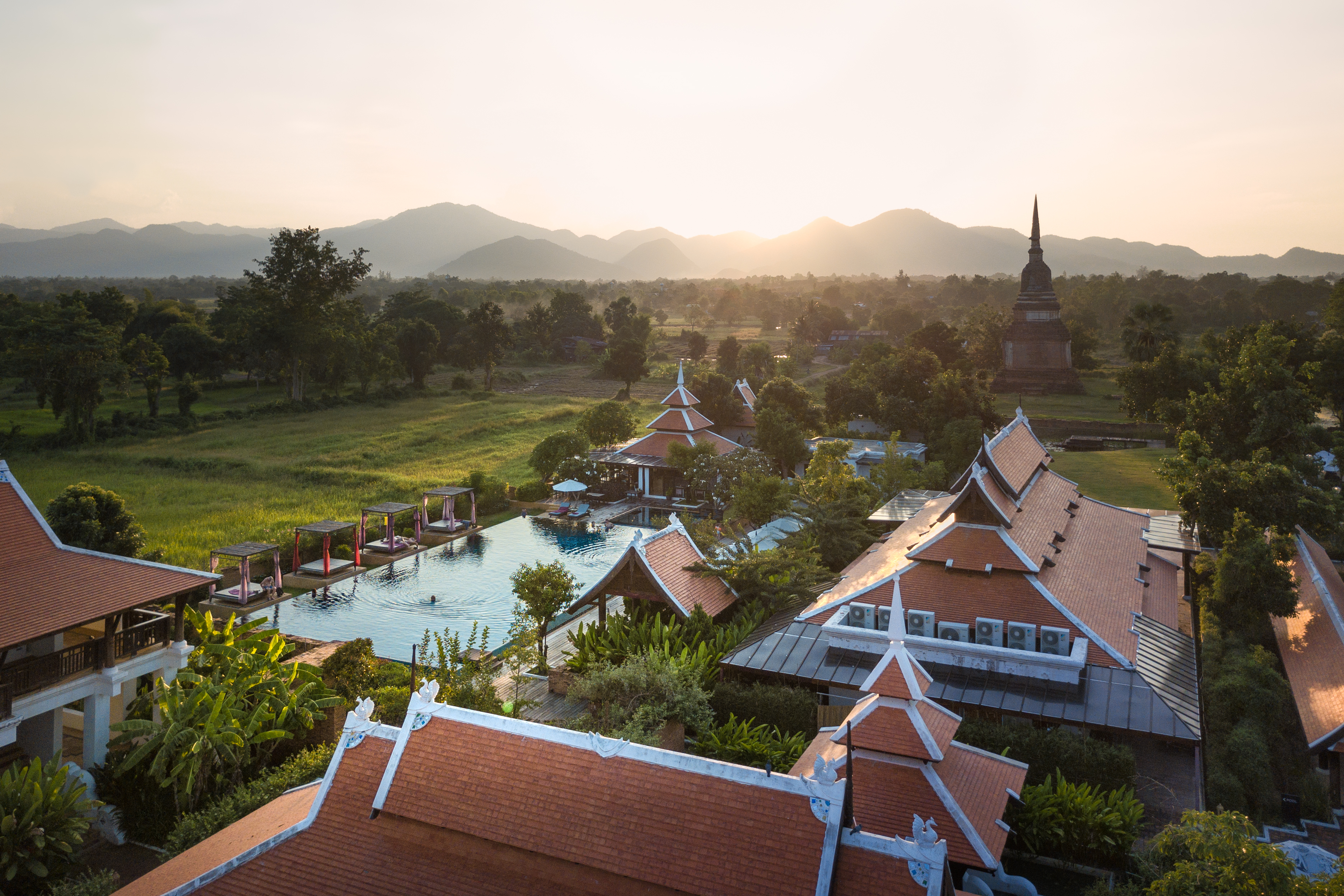
Sriwilai Sukhothai Resort & Spa
Stay 1.8 km from the ruins.
Wake before sunrise. Cycle to the park. Return for breakfast.